
Fed Rate Cuts: End of the U.S. Stock Party or New Beginning?

While market revelers expect Fed rate cuts to pour more fuel on the U.S. stock bull, historical data sends a chilling signal: rate cuts may actually spell doom for stocks.

“When everyone thinks alike, everyone is likely to be wrong.” This famous quote from contrarian analysis pioneer Humphrey Neill is being validated in the current market. The view on U.S. stocks remains unchanged: as long as the Fed delays rate cuts, this vision supports stocks oscillating upward, but if the Fed starts cutting, it could very well mark the beginning of stock weakness.
It’s impossible to predict after which cut stocks will start falling, but risk is gradually increasing. While U.S. stocks may still hit new highs in the future, risk is already mounting—everyone, pay attention to risk.
The ironclad rule that most investors firmly believe—“Fed rate cuts are inevitably bullish for U.S. stocks”—harbors a huge trap. Data since 1980 shows that after Fed rate cuts, U.S. stocks fell in 40% of cases one month later, 37% within six months, and even 27% after twelve months.
Historical Review: The Complex Relationship Between Rate Cuts and U.S. Stocks
The economic backdrop determines the effect of rate cuts. Over the past thirty years, the relationship between Fed rate cuts and U.S. stocks has not been a simple linear one. Historical data shows that the impact of rate cuts on U.S. stocks mainly depends on economic conditions.
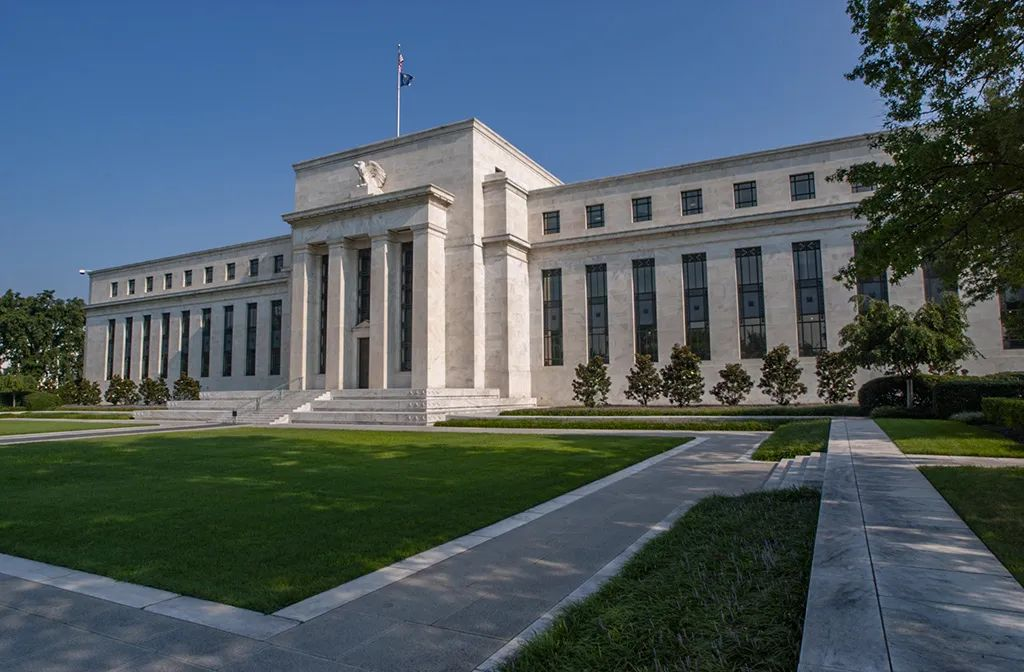
When the economy is relatively strong, rate cuts usually boost the market; when the economy is weak, rate cuts may instead lead to U.S. stock declines.
Looking back at the past thirty years, the preventive rate cuts in 1995 and 2019 successfully lifted the stock market, while the recessionary rate cuts in 2001 and 2008 failed to prevent massive stock slides.
The Economic Truth Behind Rate Cuts
Rate cuts are like painkillers—they treat symptoms but not the root cause. The signal embedded in rate cuts is that demand is weakening and profits will decline accordingly.
If rate cuts are a response to slowing growth, lower discount rates are insufficient to offset declining cash flows. This is why during economic recessions, rate cuts cannot immediately reverse the downward trend.
The current U.S. economy is facing severe challenges. August nonfarm payrolls added only 22,000 jobs, far below the expected 75,000. Even more worrying, May and June nonfarm data were also sharply revised lower.
Sky-High Valuations: U.S. Stocks’ Achilles’ Heel
Current U.S. stock valuations are already at historical highs. The S&P 500 forward P/E has reached 22x, approaching levels at the end of the internet bubble.
The forward P/E of the Technology, Media, and Telecom (TMT) sector has climbed to 26.7x, 8.7 standard deviations above the 2015-2019 average. In this high-valuation environment, any negative news could trigger a sharp pullback.
Market Structure: Hidden Fragility
Today’s U.S. stock market has a structural problem: concentration risk. The top 10 companies in the S&P 500 account for 35.5% of the index’s market cap, with a forward P/E of about 30.9x, while the rest of the components are at 17.4x.
This narrow market leadership means that once a few tech giants pull back, the entire index could face enormous pressure [citation:9]. Passive fund flows tie numerous investors to the same mast, lacking diversification to absorb shocks.
Psychological Factors: The Gap Between Expectation and Reality
Market psychology plays a key role in rate-cut cycles. Almost all investors believe there is a negative correlation between interest rate forecasts and U.S. stocks.
But research finds the opposite: over the past 12 months, on average, when the expected September meeting federal funds rate was higher than the previous day, the S&P 500 performed better.
The reason behind this anomaly is that the market has already priced in rate-cut expectations in advance. When rate cuts actually arrive, investors may “sell the fact” and take profits.
Policy Limitations: The Fed’s Dilemma
The Fed is currently facing an unprecedented predicament. Massive national debt burdens, political polarization, and geopolitical conflicts are weakening the dollar’s absolute dominance as the world’s reserve currency.
If inflation shows stronger stickiness, forcing the Fed to hesitate or limit the scope of cuts, it will reignite expectations of “higher rates for longer.”
In this environment, the Fed’s policy space and credibility are both under test and may no longer provide unconditional shelter for the market as in the past.
Global Context: The Shifting Role of the Dollar
Global investors’ confidence in dollar assets is slowly eroding. Once rate cuts begin, combined with structural factors, it may lead to global capital reconfiguration, seeking safe havens outside the dollar, such as gold or other non-U.S. assets.
This shift could have profound impacts. If the dollar loses its global dominance, U.S. asset risk premiums will have to be reassessed, potentially triggering massive revaluation across asset classes.
Investment Insights: Proceed with Caution
Facing a potential rate-cut cycle, investors need to remain cautious. Historical experience shows that in non-recessionary periods, average drawdowns are 5%-7% within three months after rate cuts, with volatility rising nearly 40%.
In the current environment of high sentiment and extreme concentration, the adjustment could be even greater. In sector allocation, shifting from leading mega-tech stocks to sectors with higher earnings visibility—such as utilities, consumer staples, and precious metals—may be a wiser choice.

Diversified allocation, focus on defensive sectors, maintaining liquidity, and adhering to a long-term perspective are effective ways to reduce risk in uncertain market environments.
Bridgewater founder Ray Dalio and Morgan Stanley have issued starkly different warnings: rate cuts may not be a boon for U.S. stocks but could instead become the fuse for market declines.
Current U.S. stocks are at historical highs, with the S&P 500 rebounding over 30% from its April low. However, data shows September is the worst-performing month for U.S. stocks, with the S&P 500 averaging a 1% decline in September since 1971.
The day Fed rate cuts land may be when the whistle sounds for investors to take profits.