
Rate Cut Hopes Cool Off Sharply, 10-Year Treasury Yield Climbs to 4.15%, Key Delayed Data Due Soon

After the U.S. government shutdown wrapped up, hawkish tones from the Fed have kept Treasury yields climbing. The 10-year yield's drifting further from 4.0%—it's hit 4.15% today. With official data held back during the shutdown, the September nonfarm payrolls report out on November 20 could be a big guidepost.
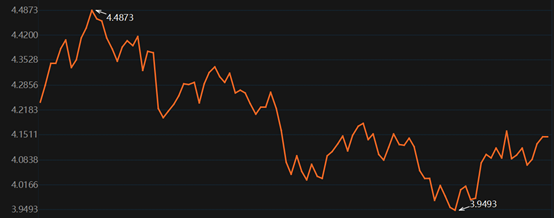
President Trump signed Congress's temporary funding bill into law on local time November 12, ending the 43-day federal government shutdown. Since then, yields across Treasury maturities have kept rising—the 10-year's gone from 4.06% to around 4.15%.
Chart: 10-Year Treasury Yield Trend in Second Half of Year
(Source: Choice data)
Influenced by the rate cut landing as expected, U.S.-China trade talks, and more, Treasury yields dipped then rebounded from October into early November. On October 20, the 10-year touched a yearly low of 3.95%.
Some research outfits figure October's cut went off without a hitch, but uncertainty on follow-ups is ramping up—market pricing for December's cut shows more splits now. Plus, the government shutdown that'd been weighing on U.S. equities lifted just before the next Fed decision, sparking a re-pricing of Treasuries.
Lately, hawkish voices inside the Fed are getting louder. Cleveland Fed President Hammack said last week the Fed should hold rates steady to keep pressure on inflation. Minneapolis Fed's Kashkari flipped from dove to hawk, saying the economy's basic resilience is stronger than thought and doesn't back the last rate cut; he's staying neutral on the best move for December. Fed Chair Powell noted back in late October that a December cut's far from a done deal.
One research team wrote that with these hawkish officials speaking out, big sell-offs hit the March 2025 SOFR futures and January 2026 fed funds contracts, nudging markets to dial back expectations for the December 10 FOMC meeting's cut size.
Latest from CME's "FedWatch" tool shows the odds of a 25-basis-point December cut down to 44.4%, while the chance of no change is up at 55.6%. CME's December cut probabilities have shifted steadily since late October: 94.2% on October 15, down to 66.9% on November 7, 50.1% on November 13, and now 44.4% today.
On top of that, the data blackout during the shutdown makes it tough to read the U.S. economy's direction—key indicators like September nonfarms, October CPI, and October nonfarms that could sway Fed cut decisions are all delayed. What's locked in: September nonfarms drops November 20.
From early November's ADP report, U.S. October private payrolls added 42,000 jobs—way above the 30,000 expected and flipping the prior month's revised drop of 32,000 (now tweaked to 29,000).
That same research team thinks the Fed's internal hawks are turning up the volume—even its usual mouthpiece Nick Timiraos has penned pieces highlighting the split multiple times lately. No ruling out skipping December's cut; better to wait on this week's data for direction.
Longer term, with capex and credit cycles speeding up, U.S. economic fundamentals might beat what markets expect—plus sticky inflation capping things, the Fed's 2026 cut room could be pretty tight. Add in a phase of U.S.-China trade easing and the shutdown's end, and that'll further juice U.S. growth momentum, putting some strain on Treasuries.