
Jensen Huang Slams “AI Bubble” Narrative: Nvidia Demand Is Off the Charts, AI Is Already Paying Off for Customers

Eastern Time Wednesday after the close, US “AI bellwether” Nvidia reported fiscal Q3 earnings. The report was essentially “perfect”: not only did revenue and earnings beat analyst expectations, but forward guidance also exceeded forecasts. The stock rose in after-hours trading, up 4.84% as of press time.
What excited investors even more was that Nvidia CEO Jensen Huang directly attacked the “AI bubble” theory in both the earnings press release and the conference call, while CFO Colette Kress delivered a series of encouraging messages that—at least temporarily—eased investor concerns about an AI bubble.
Jensen Huang Directly Fires Back at “AI Bubble” Claims
In the earnings release, Jensen Huang stressed explosive demand for Nvidia products:
“Blackwell revenue far exceeded expectations, and cloud GPUs are sold out. The AI ecosystem is expanding rapidly—more new foundation model builders, more AI startups, across more industries and more countries. AI is everywhere and capable of everything.”
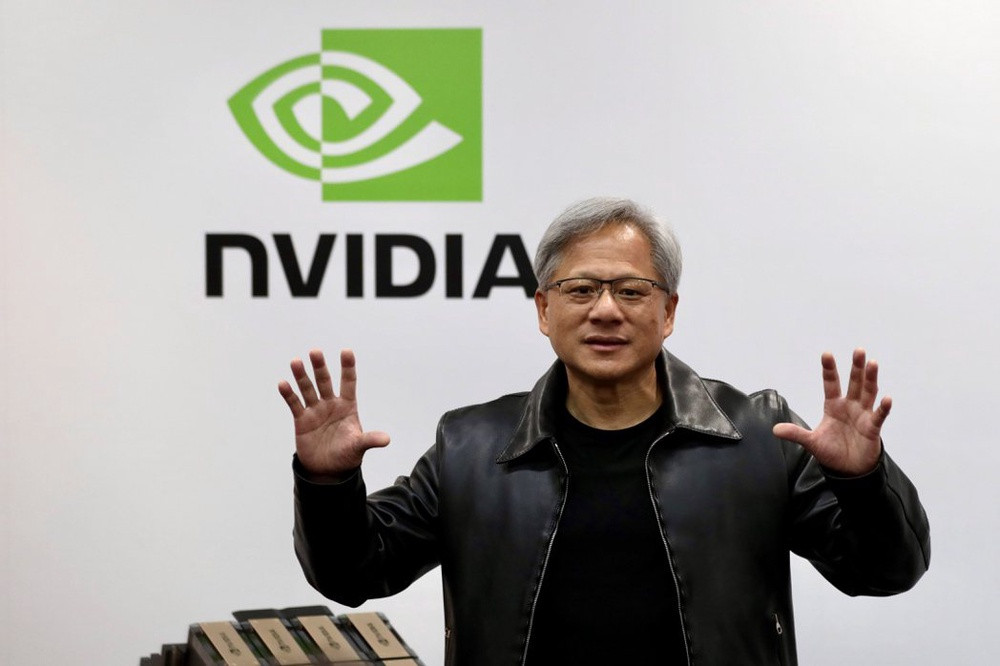
On the analyst call, Huang was even more blunt in pushing back against commentators and analysts warning of an AI “bubble.” He said:
“There’s been a lot of talk about an AI bubble. But from our vantage point, the situation looks very different.”
He added that Nvidia is positioned to succeed “at every stage of AI—from pre-training and post-training to inference.”
“This answers many questions about where the AI revolution currently stands. The conclusion is simple: AI is nowhere near its peak—for the foreseeable future—whether measured by market demand or production supply chain,” commented Investing.com senior analyst Thomas Monteiro after the report.
“AI Is Already Delivering Returns for Customers”
CFO Colette Kress revealed on the earnings call that Blackwell sales momentum continues to grow, while Rubin revenue remains “on track” for growth in the second half of 2026.
Kress stated: “We now see Blackwell and Rubin generating $500 billion in revenue from the beginning of this year through the end of 2026.”
She later added: “GB300 sales have surpassed GB200, contributing roughly two-thirds of total Blackwell revenue. The transition to GB300 has been very smooth.”
In an unusual move, she highlighted positive AI-related comments from recent partner earnings reports to emphasize that AI is already paying off:
For example, Meta’s AI recommendation systems are causing users to “spend more time on Facebook and Threads”; Anthropic recently said it expects $7 billion in annualized revenue this year; Salesforce’s engineering team has seen 30% higher productivity since using AI for coding. She also cited a series of enterprise customer examples.
CFRA analyst Angelo Zino said: “This company is essentially 100% driven by data center right now, and supply remains constrained—we think that will persist into 2026, and just from the bookings we’re seeing from hyperscalers… it means supply will be quite tight next year and possibly throughout 2027.”
“That’s a good sign for data-center revenue potential,” Angelo Zino continued. “We believe gross margins can stay around 70% for the foreseeable future.”
However, Huang’s remarks did not completely dispel market doubts. During the earnings call, Nvidia’s after-hours gains narrowed somewhat, and Stifel analyst Ruben Roy noted: “Concerns that AI infrastructure spending growth is unsustainable are unlikely to fully disappear.”