
Research Report: Asia-Pacific Data Center Capacity Experiencing Explosive Growth – 22% Annual Growth Over the Next Five Years

Recently, the globally renowned management consulting firm AlixPartners released a market analysis report on data centers in the Asia-Pacific region, detailing the development landscape of data centers in the Asia-Pacific region and the profitability challenges they face.
Sai Tunuguntla, Managing Director at AlixPartners, stated in the report that since 2020, data center capacity in the Asia-Pacific region has been growing at a compound annual growth rate of 15%. It is expected that from 2025 to 2030, data centers in the region will continue to expand at a compound annual growth rate of 22%.
This rapid growth rate, combined with the Asia-Pacific region accounting for 62.18% of the global population and an internet penetration rate of 70.4%, means the Asia-Pacific data center market will become a focal sector in the global digital infrastructure space.
Rapid Growth of Data Centers in the Asia-Pacific Region
AlixPartners summarized data center statistics for ten key markets in the Asia-Pacific region. The data shows that in these key markets, data center capacity is continuously increasing, and new market participants keep entering.
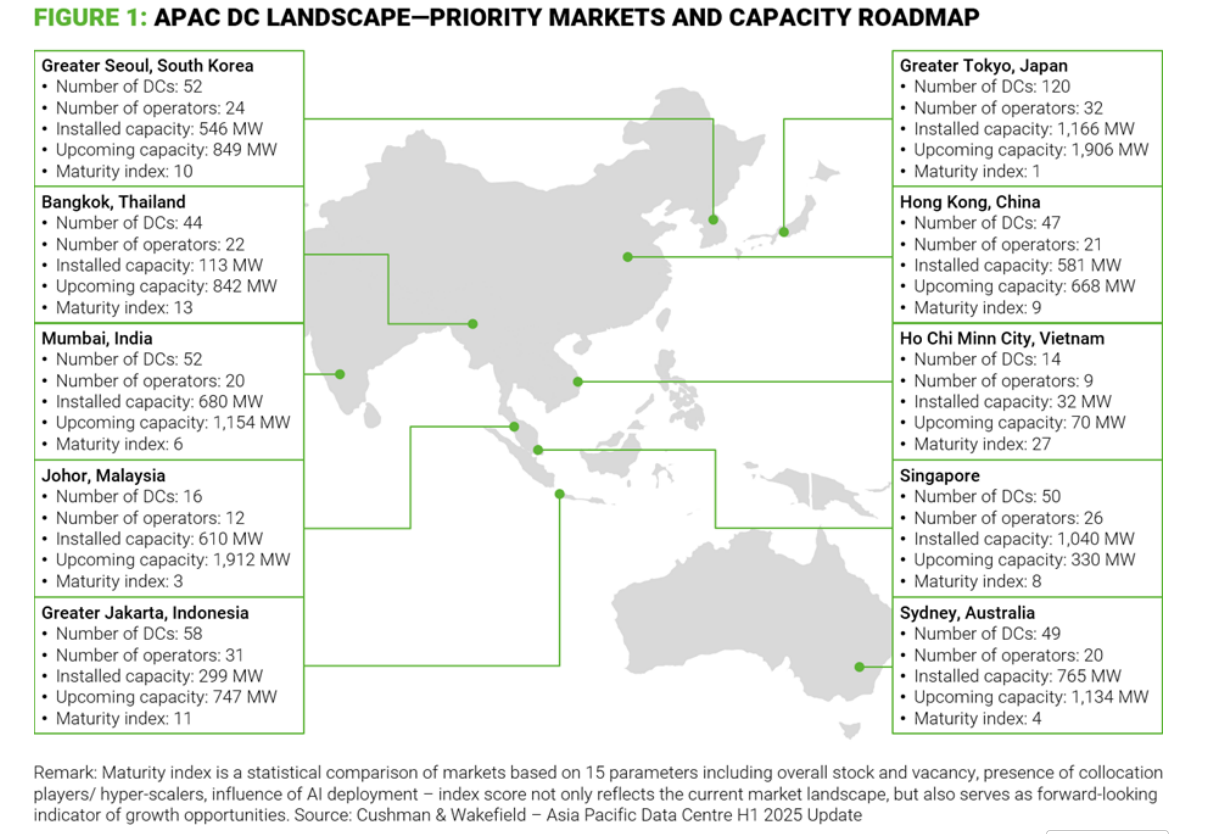
However, even with favorable conditions, data center operators in the Asia-Pacific region still face numerous challenges, making their path to profitability highly uncertain.
- Supply-Demand Imbalance: Asian markets face a long “build-to-monetization” cycle
In major markets like Japan, the issue lies in the shortage of general contractors (GCs); in other markets such as India and Malaysia, obtaining permits before construction takes a significant amount of time. This forces data center operators to plan and invest in capacity well in advance when considering mid-term growth. Moreover, due to this uncertainty, the timing of capacity coming online is unpredictable — sudden increases and oversupply can put pressure on profit margins.
- AI-Related Uncertainty
Although artificial intelligence brings development opportunities for data center operators, predicting its demand in the Asia-Pacific region is quite difficult. The rack density required by AI has increased dramatically, which has secondary design impacts on floor loading capacity, cooling systems (liquid cooling vs. air cooling), and backup systems.
- Geopolitical Influence
Geopolitical tensions between Eastern and Western countries have already affected the Asia-Pacific market, as seen in markets like Malaysia — parallel infrastructure has emerged to serve different client groups, resulting in higher upfront capital expenditure and suboptimal facility utilization rates.
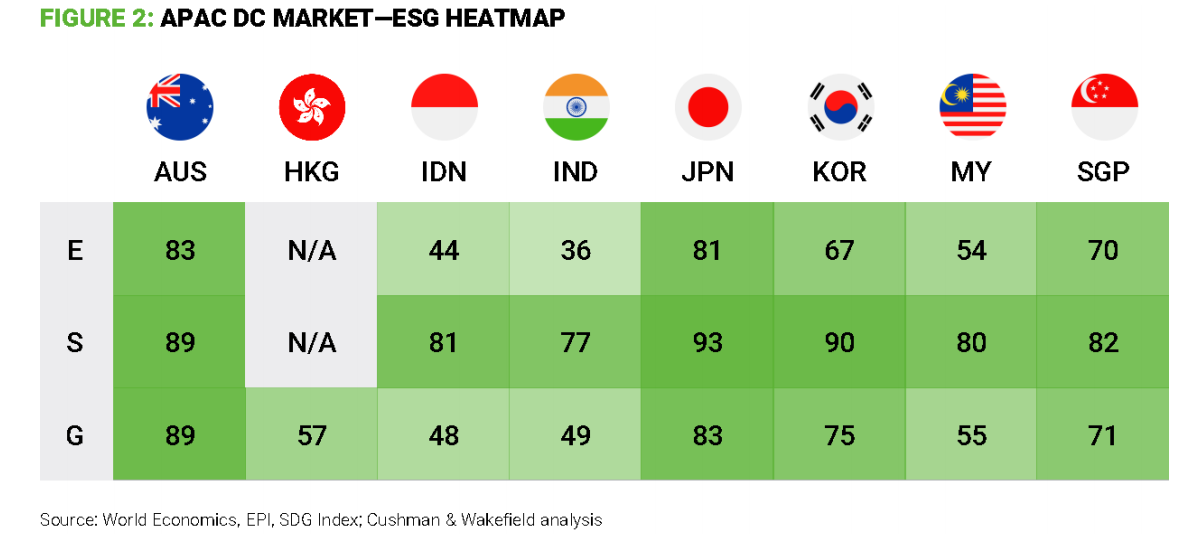
- Environmental, Social, and Governance (ESG) Concerns
Multiple markets in the Asia-Pacific region face water shortages and insufficient power supply.
- Rising Capital Expenditure (Capex) and Operating Expenditure (Opex)
Data center construction costs are inherently high, and factoring in AI workloads will drive costs up significantly. Therefore, operators need to re-examine or strengthen their business planning to balance capital expenditure, operating expenditure, and revenue.
Overall, data center operators in the Asia-Pacific region are facing a new reality: although demand continues to rise, profitability is becoming increasingly difficult.
To address the above issues, AlixPartners proposes a viable path to achieving profitability and shareholder returns: differentiated development to achieve sustainable growth, driving operational excellence, and optimizing financial results.
AlixPartners concludes:
“Those companies that move beyond the capacity race and instead focus on building differentiated and realistic operating models will survive and truly unlock the potential of the Asia-Pacific region’s digital decade.”