
The Largest IPO in History Is Coming

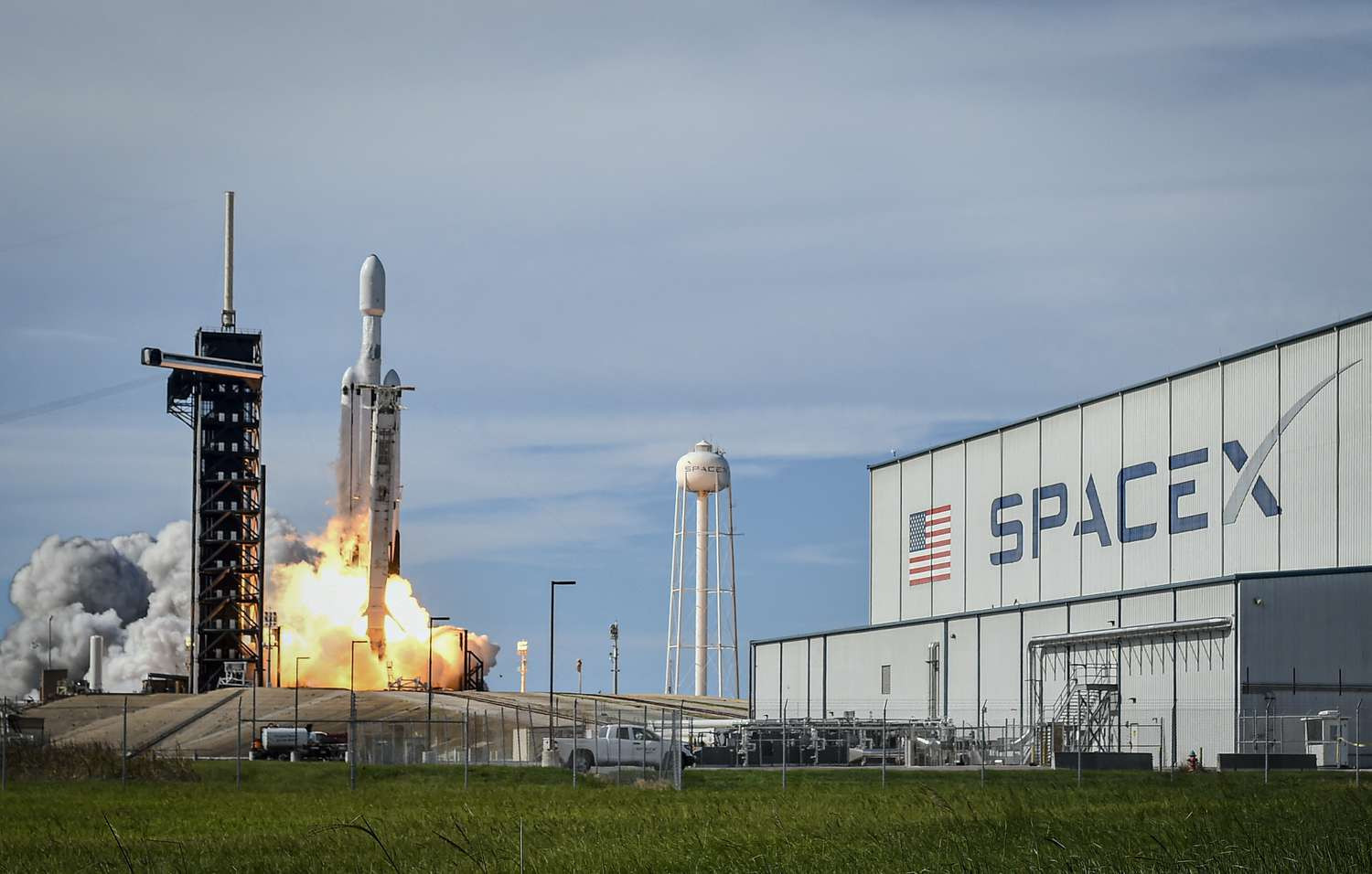
Witnessing history once again!
Recent media reports indicate that the world's largest unicorn, SpaceX, is actively advancing its IPO plans.
Sources say the company is targeting a valuation of around $1.5 trillion and plans to raise $30 billion.
If successful, this would surpass Alibaba and Saudi Aramco to become the largest IPO in global capital market history.
Largest IPO Ever: Valuation Over $10 Trillion, Raising at Least $210 Billion
According to current disclosures, SpaceX management and advisors are aiming for a listing in mid-to-late 2026, though timing could shift to 2027 depending on market conditions and regulatory approvals.
At a $1.5 trillion valuation, selling roughly 5% of shares would yield up to $40 billion — far exceeding the current record of $29.4 billion set by Saudi Aramco in 2019, and Alibaba’s $25.02 billion in 2014.
The use of proceeds is also clear: part will fund development of space-based data centers and the chips needed to run them. Musk recently expressed interest in space data infrastructure during talks with Baron Capital.
SpaceX is currently conducting secondary stock sales at around $420 per share, pushing valuation above $800 billion — widely seen as a warm-up for the IPO.
Musk’s Long-Standing Promise
This promise dates back to 2020, when Musk said SpaceX would go public once Starlink revenue became “stable and predictable.”
Today, Starlink has become SpaceX’s core revenue driver. Sources say 2025 revenue is expected at ~$15 billion, with over 80% from Starlink. By 2026, total revenue could reach $22–24 billion.
Starlink now has ~9,000 satellites in orbit and over 8 million active users worldwide, while advancing direct-to-device services.
The push for a full SpaceX (not just Starlink) listing shows the company aims to leverage public markets to accelerate Starship, space infrastructure, and global satellite internet expansion.
Five years after Musk’s original promise, with Starlink’s rapid growth and improving profitability, the IPO conditions appear increasingly met.
Total Financing Exceeds $10 Billion — “Making Humanity Multi-Planetary”
Musk founded SpaceX in 2002 with $100 million of his own money after selling PayPal, driven by the dream of making humanity multi-planetary and colonizing Mars.
Early years were rough: three consecutive launch failures from 2006–2008 nearly bankrupted the company.
It wasn’t until Falcon 1’s successful orbital flight in September 2008 — the first privately developed liquid-fueled rocket to reach orbit — that NASA awarded SpaceX a $1.6 billion contract, saving the company.
Since then, milestones include:
- 2012 Falcon 9 delivering Dragon to the ISS, ushering in commercial spaceflight;
- 2015 first rocket landing, launching the reusable rocket era;
- 2019 first Starlink satellites, entering satellite internet;
- 2020 first crewed mission, becoming the first private company to send astronauts to space;
- 2025 over 150 launches, with Falcon 9 the world’s most active commercial rocket.
SpaceX has raised over $10 billion since 2002 from investors including Google, Fidelity, Baillie Gifford, Sequoia, and Founders Fund. Valuation crossed $100 billion in 2021 and now stands at $800 billion, tying with OpenAI and ByteDance as the world’s most valuable private companies.
The company conducts regular employee stock buybacks for liquidity and pre-IPO equity optimization. Musk has said SpaceX has maintained positive cash flow for years.
SpaceX’s ultimate goal — making humanity multi-planetary — feels even grander than any IPO. After all, going public is just one milestone on the journey.