
AI Boom Ignites Storage Demand! Japan's Kioxia Soars 540% in 2025 to Become Top Global Performer

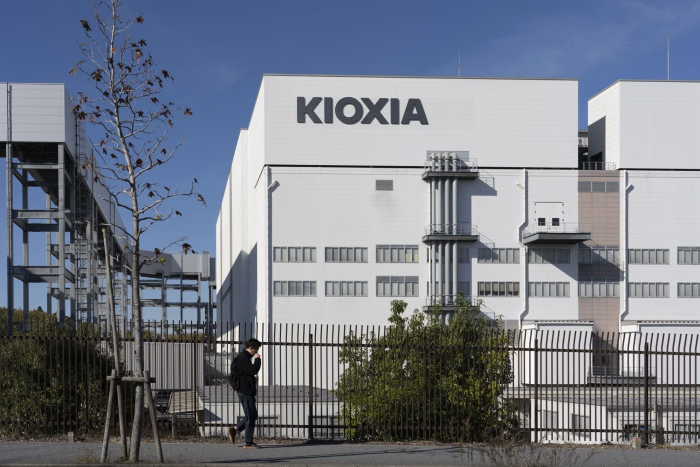
The explosive need for data storage in artificial intelligence has propelled Japanese memory chipmaker Kioxia Holdings Corp. to the biggest stock gain worldwide in 2025, underscoring that the AI frenzy is still going strong even as overall market sentiment turns cautious.
Since the start of the year, Kioxia's shares have rocketed about 540%, outperforming every stock in the MSCI World Index and claiming the crown as the top performer on Japan's Topix Index.
The flash memory specialist only went public on the Tokyo Stock Exchange last December. Its customers include heavyweights like Apple and Microsoft, and it now boasts a market cap of roughly ¥5.7 trillion (about $36.6 billion).
Kioxia's massive run-up highlights the surge in demand for storage chips as hyperscalers race to build out AI infrastructure. The company's chips are critical for AI training and data centers.
With demand skyrocketing, tech firms have been warning of memory chip shortages, and analysts are forecasting sharp price hikes.
This storage boom has been the rocket fuel behind Kioxia's gains. Investors are betting that sustained strong demand and rising prices will deliver a big revenue boost.
"Looking ahead to 2026 in tech, our focus is squarely on memory chips—whether direct plays like Kioxia or indirect beneficiaries," said Amir Anvarzadeh, Japan equity strategist at Asymmetric Advisors Pte.
He pointed to wafer makers like Sumco Corp. as likely to ride the same wave next year.
That said, Kioxia's blistering rally has sparked worries about overvaluation, a concern that's rippled through other AI names too. Just last month, the stock plunged 23% in a single day after quarterly results fell short of sky-high expectations.
But Anvarzadeh thinks Kioxia is well-positioned to weather any AI market wobbles next year, given that memory demand still far outstrips supply.
"Any fears of a slowdown in data center spending shouldn't really dent the next leg of memory pricing, since the market's already in severe undersupply," he added.