
Silver, Tech, and Bitcoin! Where Wall Street is Most Crowded, the Stampede is Most Severe...

In every corner of Wall Street, the blind, daily pursuit of hot assets like tech stocks, gold, and cryptocurrency is evaporating, replaced by a sudden and aggressive retreat from risk.
On the surface, this cross-asset sell-off lacks a single catalyst—unlike the "Liberation Day" trade war fears sparked by President Trump last April that sent markets into a panic. Instead, the current market feels more like "death by a thousand cuts" from a series of negative headlines. These reports have intensified collective anxiety over stretched valuations—which many had already suspected were overheated—finally triggering a synchronized exodus by investors.
The consequence of the continuous unwinding of momentum strategies is a total wipeout for "high-beta" assets. Wherever Wall Street was most crowded, the stampede to the exits has been the most brutal.
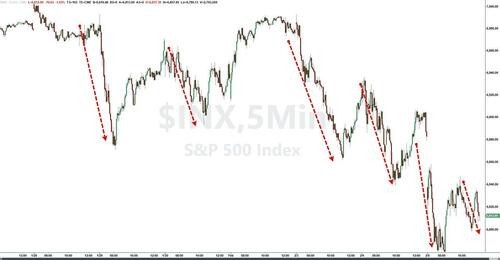
Thursday’s price action further confirmed this trend. The S&P 500 fell 1.2%, marking its third consecutive day of losses; by the close, the index had erased all of its year-to-date gains. Meanwhile, the Nasdaq 100 broke below its 100-day moving average, capping its most violent three-day slide since last April.
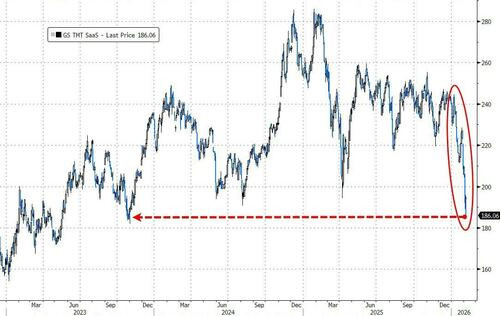
Software stocks extended their decline after AI startup Anthropic unveiled a new model specializing in financial research, underscoring the competitive threat new technology poses to incumbents. The S&P 500 Software & Services Index fell 4.6%, its seventh straight losing session.
After the bell on Thursday, Amazon shares tumbled more than 8% after its latest earnings report projected capital expenditures would surge over 50% this year, far exceeding analyst estimates. Market participants are increasingly wary of tech giants' massive over-investment in artificial intelligence.
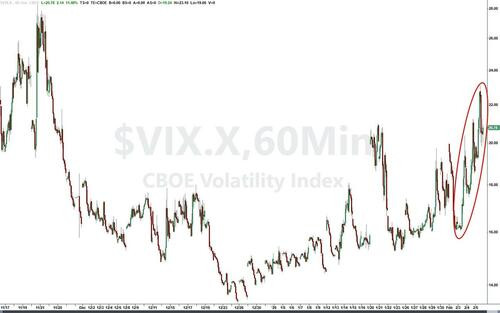
Currently, the VIX—Wall Street’s "fear gauge"—has reached 23, its highest level since November 2025, and has remained above 20 for three consecutive days.
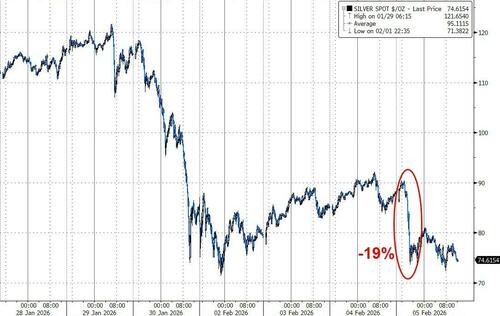
Simultaneously, silver prices plummeted nearly 20% on Thursday, with another 10% slide during Friday’s Asian session. Spot silver is now trading near $64 per ounce, nearly half of the $121 record high set late last month.
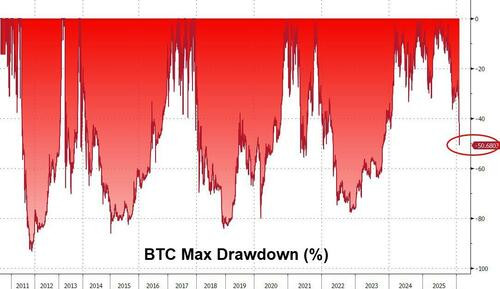
Bitcoin also crashed below $65,000 on Thursday, marking its largest single-day drop since the FTX collapse, as the unwinding of leveraged bets and overall market volatility fueled the sell-off. Just a week ago, the decline accelerated after breaking the $80,000 mark. Compared to its October peak of $126,000, Bitcoin has now shed nearly half its value.
"Investors have clearly shifted to a defensive strategy," said Brian Frank, President and Portfolio Manager at Frank Funds. "The current environment is very much 'shoot first, ask questions later.'"
This downturn stands in sharp contrast to the sentiment at the beginning of the year, when Wall Street strategists predicted the longest winning streak for stocks in nearly two decades. Those forecasts were built on three pillars: the AI boom, resilient economic growth boosting corporate profits, and a steady path of Fed rate cuts.
While those fundamental prospects remain largely intact—supported by solid earnings reports over recent weeks—the market has begun to refocus on growing risks:
The companies that will be rendered obsolete by AI; the policy uncertainty if Trump’s nominee Kevin Warsh replaces Jerome Powell as Fed Chair; and the sky-high valuations of gold, Bitcoin, and tech giants like Alphabet—multiples that may be unsustainable in the long run.
Goldman Sachs’ "High Beta" or Unconstrained Momentum basket (GSPRHIMO) suffered its worst day since 2022 on Wednesday. Overnight markets showed no signs of recovery from the previous day's rout.
This stall in momentum is reflecting across other popular asset classes, such as Bitcoin. For much of last year, Bitcoin experienced a meteoric rise as Trump's victory triggered a speculative frenzy in crypto, but that market has slumped this month as investors pull capital.
The Bitcoin sell-off intensified throughout Thursday’s trading session, dragging down other tokens, ETFs, and asset managers with heavy crypto exposure like MicroStrategy Inc. By the end of the New York session, Bitcoin had plunged 13% to roughly $63,000, losing about half its market value since its peak four months ago.
"The panic and uncertainty in the market are palpable," said Chris Newhouse, Head of Business Development at Ergonia.
In fact, the decline in equities remains relatively moderate compared to other assets, but the stress is spreading across the board—9 of the 11 S&P 500 sectors retreated on Thursday. Beyond fears of AI disruption, investors are deeply concerned about whether massive technical investments will eventually yield returns. This was evident in Alphabet’s decline; despite beating revenue estimates, the stock fell following its announcement of ambitious spending plans.
Charlie McElligott of Nomura highlighted a significant concern after Thursday's close:
The equity index options market today began pricing in real "crash" risks for the first time. Implied and realized volatility are starting to swing violently, and the volatility of volatility (vVol) shows that tail risk is being "bought up." Specifically, the "AI disruption" turmoil affecting traditional heavyweights in tech, growth, SaaS, and blue-chip compounders is now spreading. This "unease" has recently leaked into private credit, Business Development Companies (BDCs), and Private Equity (PE)—sectors that hold large positions in these assets with valuations at recent historical peaks.
Kim Forrest, Chief Investment Officer at Bokeh Capital Partners, noted that the recent correction reflects market fears that hot stocks and assets like gold have climbed too far, too fast.
"This is a reset," she said. "Market momentum may have simply been over-exhausted."