
Global Highlights for This Week: Houthi Rebels Enter Conflict as Powell Heads to Harvard Economics Classroom

As the first quarter of 2026 draws to a close, the global landscape is descending further into volatility. The ceasefire in the Middle East, long anticipated by global investors, remains elusive. Israeli airstrikes on Iran have persisted, triggering a wave of retaliatory strikes across Israel and the Gulf states. Aluminum plants in the UAE and Bahrain have reported structural damages, while Kuwait International Airport was engulfed in flames following a recent strike.
The military dimensions of the conflict expanded this week with the confirmed arrival of a U.S. Marine Expeditionary Unit in Middle Eastern waters. U.S. Central Command stated that the task force, comprising approximately 2,500 Marines, brings significant amphibious assault capabilities and strike fighter support to the theater.
The most disruptive variable, however, emerged this past weekend as Yemen’s Houthi rebels officially entered the month-long war. Spokesman Yahya Saree confirmed the launch of cruise missiles and drones against Israel, vowing that "military operations will continue in the coming days." This marks the first Houthi offensive against Israel since the October 2025 truce between Israel and Hamas.
While the group has yet to declare whether it will target tankers in the southern Red Sea and the Bab el-Mandeb Strait, Saudi Arabia has responded by pushing its East-West pipeline to maximum capacity, shifting crude flows to the port of Yanbu—now a strategic cornerstone for global oil stability.
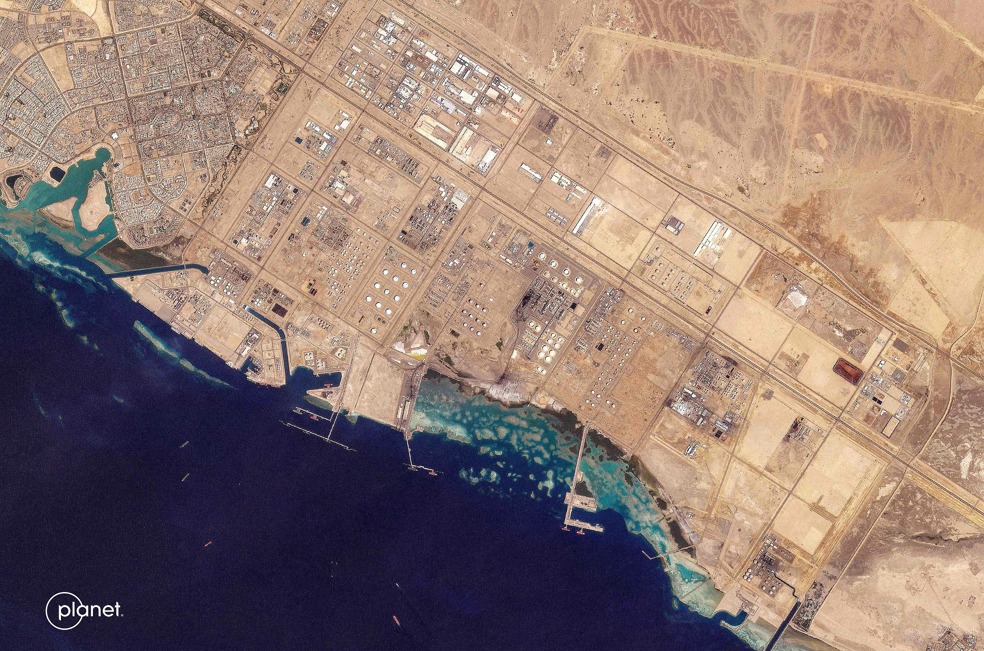
In a recent client note, analysts at Eurasia Group suggested that the Houthis might honor their existing truce with Riyadh to avoid targeting Saudi oil infrastructure. However, they warned that should the situation escalate further, Saudi export facilities remain well within the rebels' strike range.
Since the onset of hostilities, Brent crude has surged nearly 50%, forcing the S&P 500 to surrender every psychological handle between 6,900 and 6,400. With Western markets heading into the Easter holiday later this week, investors face a high-stakes decision on whether to hold equity positions through the long weekend.
Amidst the geopolitical fog, a critical suite of U.S. labor data will provide a snapshot of the economy’s resilience against soaring energy costs. The market will focus on Tuesday’s JOLTS job openings, Wednesday’s ADP private payrolls, and Friday’s non-farm payrolls (NFP) report.
Economists currently project 56,000 new jobs for March, with the unemployment rate holding at 4.4%. With capital markets already pricing in potential Fed hikes, a cooling labor market would significantly complicate the policy calculus for Washington.
In a rare academic engagement, Fed Chair Jerome Powell is scheduled to appear Monday at Harvard University to participate in a discussion during a "Principles of Economics" class. Meanwhile, the Eurozone and several European nations will release preliminary March CPI data this week, offering the first comprehensive look at the inflationary impact of the energy spike.
While the primary Q1 earnings season is still two weeks away, a handful of notable firms including Nike, Chagee, and McCormick will report results. Of particular interest to the tech sector is FactSet, often cited as an "AI casualty," which reports Tuesday after the bell.
The week also marks the traditional release of Q1 delivery figures from automakers. In a consensus compiler released Thursday, Tesla downwardly revised its 2026 delivery estimate to 1.689 million units, down from the 1.75 million projected in Q4 2025. Additionally, the corporate world will mark two major milestones this week: the 55th anniversary of Starbucks and the 50th anniversary of Apple Inc., with both companies planning commemorative events.
Weekly Economic Calendar
Monday (Mar 30): G7 Finance Ministers and Central Bank Governors Meeting; Fed Chair Powell attends Harvard discussion; Eurozone March Economic Sentiment; BoJ Summary of Opinions.
Tuesday (Mar 31): China Official Manufacturing PMI (March); Eurozone Preliminary CPI (March); U.S. JOLTS Job Openings.
Wednesday (Apr 1): U.S. ADP Private Payrolls; U.S. Retail Sales (Feb); Eurozone Manufacturing PMI (Final).
Thursday (Apr 2): U.S. Trade Balance (Feb); ECB Economic Bulletin.
Friday (Apr 3): U.S. Non-farm Payrolls (March); Major Western exchanges closed for Good Friday.