
AI Surge Meets Grid Overhaul: Morgan Stanley Projects U.S. Transformer Supercycle Through 2030

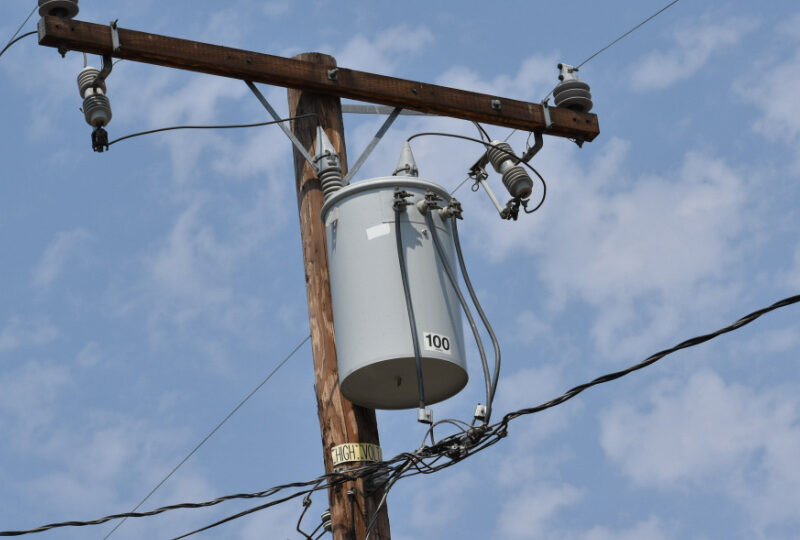
The United States is currently entrenched in a transformer supercycle catalyzed by a convergence of grid modernization, the renewable energy transition, and the explosive expansion of data centers.
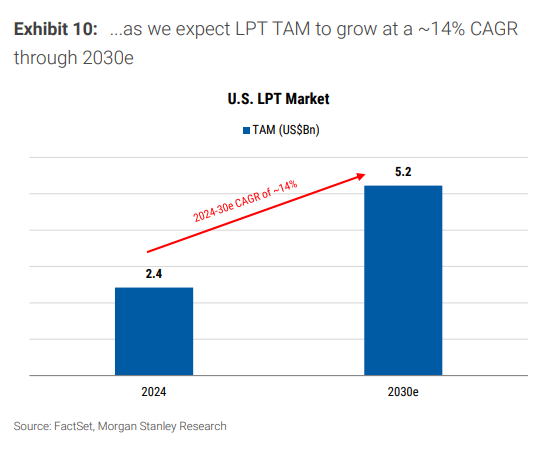
Jens Spiess, an analyst at Morgan Stanley’s Mexico division, released a comprehensive report alongside global teams concluding that the U.S. power grid is experiencing a profound supply-demand mismatch. This structural imbalance is expected to persist until at least 2030, with the market for Large Power Transformers (LPTs) projected to expand at a compound annual growth rate (CAGR) of approximately 14%, securing a multi-year window of windfall profits for manufacturers.
The fundamental drivers of this cycle reflect two decades of stagnant power demand finally returning to a growth trajectory. Aging infrastructure necessitates urgent replacement, while the large-scale integration of wind and solar assets creates novel transmission requirements.
These forces are compounded by the rapid build-out of data centers, driving a surge in LPT demand that domestic capacity cannot meet. Since 2021, apparent consumption of LPTs in the U.S. has tripled, while domestic production grew by less than 60% over the same period. Consequently, import reliance has surged from 70% in 2021 to over 85%.
Morgan Stanley identifies "pure-play" transformer manufacturers as having the highest earnings leverage in this environment. Under a bull-case scenario driven by LPT market growth, 2027 earnings-per-share (EPS) estimates for HD Hyundai Electric, GE Vernova (GEV), WEG, LS Electric, and Sieyuan Electric see potential upside of 8%, 6%, 5%, 4%, and 4%, respectively.
Manufacturers are locking in high margins through price-adjustment clauses in their contracts, with order backlogs currently extending 3 to 5 years. This high-margin state is expected to be sustained through at least 2030.
Demand Drivers: Beyond Aging Infrastructure
The decay of the U.S. electrical grid serves as the baseline for this crisis. U.S. Department of Energy data from 2024 indicates that approximately 55% of distribution transformers currently in service have exceeded their 33-year design life.
However, the more significant variable is the fundamental shift in demand structure. After twenty years of near-zero growth, Morgan Stanley now forecasts electricity demand to grow at a 2.6% CAGR through 2035—a projection that has been revised upward multiple times over the last two years.
Approximately 78% of this incremental demand originates from data centers, where power consumption is expected to grow by 30% annually over the next five years. This will push data centers' share of total U.S. electricity use from 6% in 2024 to 18% by 2030.
Between 2025 and 2028, U.S. data centers are projected to add 74 GW of new power demand, resulting in a supply-demand gap of 9 to 18 GW. Simultaneously, the transition to renewables requires step-up transformers at every interconnection point. Wind and solar are expected to account for 53% of the 759 GW in planned new capacity as renewables' share of the U.S. generation mix rises to 32% by 2035.
Supply Fails to Meet Demand: New Facilities Slated for 2027 at Earliest
The severity of the supply shortfall is underscored by current production figures. In 2024, U.S. domestic LPT output was estimated at only 200 to 300 units. Supporting new generation capacity alone through 2030 would require approximately 4,300 LPTs—roughly double to triple current domestic output, assuming no expansion. Accounting for grid modernization and microgrid retrofits could quadruple that requirement.
While industry leaders including Siemens Energy, HD Hyundai Electric, Eaton, Hitachi Energy, and Prolec GE have announced North American expansions, new facilities typically require 1 to 3 years to commence production. Furthermore, manufacturing equipment lead times can extend up to six years, and the highly customized nature of these products further lengthens production cycles.
Most new capacity is not expected to come online until the 2027–2029 window, ensuring a seller's market remains intact. Although transformer prices have surged 80% over the last five years, management at WEG, GE Vernova, and Siemens Energy recently noted that pricing is beginning to stabilize.
However, analysts emphasize this is not a margin peak; rather, manufacturers have locked in high profitability through price-adjustment mechanisms covering raw materials, inflation, and tariffs in their existing backlogs.
Morgan Stanley has upgraded its ratings for seven companies in the sector. HD Hyundai Electric maintains the highest North American exposure with a backlog extending to 2028 and record operating margins of 27.6%. GE Vernova holds a $30.5 billion backlog with visibility through the end of the decade, while Eaton's electrical sector backlog reached a record $15.3 billion.
Siemens Energy’s Grid division backlog stands at €21.4 billion with further margin expansion anticipated. Sieyuan Electric continues to penetrate mature overseas markets, and CG Power plans to quintuple its LPT capacity following a significant order from a U.S. data center. LS Electric is expected to see a 45% EPS CAGR from 2025 to 2028, driven by distribution demand for AI data centers.