
Global Highlights for This Week: Ceasefire Buoys Markets as Earnings Season Tests Resilience
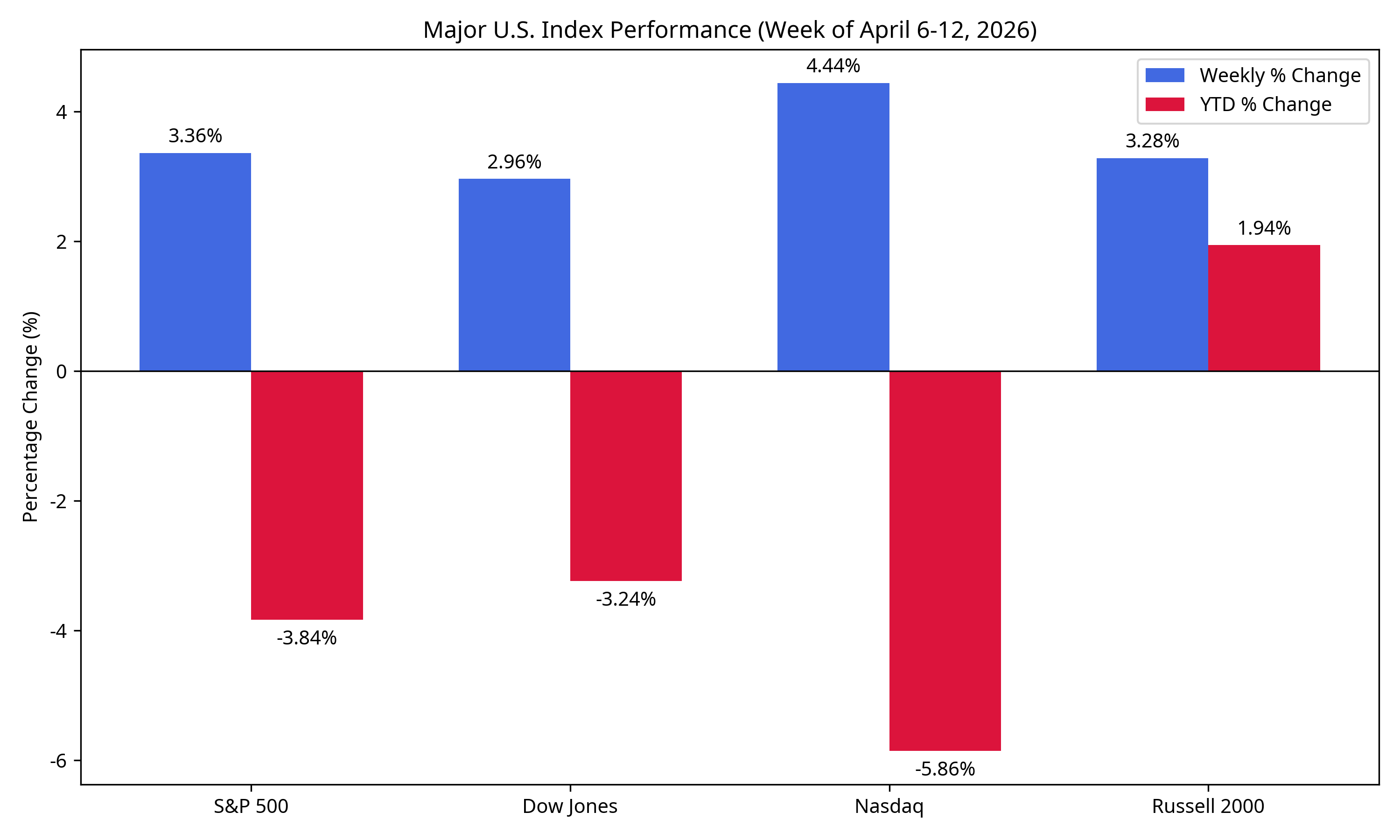
Last week, optimism over a de-escalation in geopolitical tensions lifted financial markets, fueling a broad rally across major U.S. indices while international crude prices saw a sharp correction.
By Friday's close, the Dow had gained 3.04% for the week, the S&P 500 rose 3.56%, and the Nasdaq climbed 4.68%.
Both the S&P and Nasdaq recorded their best weekly performance since last November. Conversely, WTI crude plunged approximately 13.4%, marking its steepest weekly decline in six years.
Charts sourced from GoAI Deep Dive
Early last week, the U.S. and Iran agreed to a two-week ceasefire, with Tehran pledging safe passage through the Strait of Hormuz during this window. However, the conflict remains the market's primary variable, and sentiment this week is expected to remain highly sensitive to developments in the Middle East.
On Sunday morning local time, U.S. Vice President JD Vance held a press conference at the Serena Hotel in Islamabad, Pakistan. He announced that negotiations between the United States and Iran failed to reach an agreement, citing persistent and significant divisions. The U.S. delegation is set to return home.
Vance stated that after approximately 21 hours of "substantive discussions" over multiple rounds, the talks concluded without a breakthrough.
"We have now been at this for 21 hours, and we’ve had many substantive discussions with the Iranians. That’s the good news. The bad news is that we have not reached an agreement," Vance said. "I think that’s worse news for Iran than it is for the United States. We are heading back to the U.S. without a deal."
He added, "We have been very clear about our bottom line—where we are willing to compromise and where we are not. We’ve made that as clear as possible, but they have apparently chosen not to accept our terms."
According to Vance, the primary sticking point remains Iran’s refusal to provide a clear and definitive commitment to abandoning its nuclear weapons program.
Against this backdrop, U.S. investors enter the Q1 2026 earnings season this week, spearheaded by the major money-center banks. Despite the energy price shocks triggered by the conflict, expectations for robust corporate earnings remain intact.
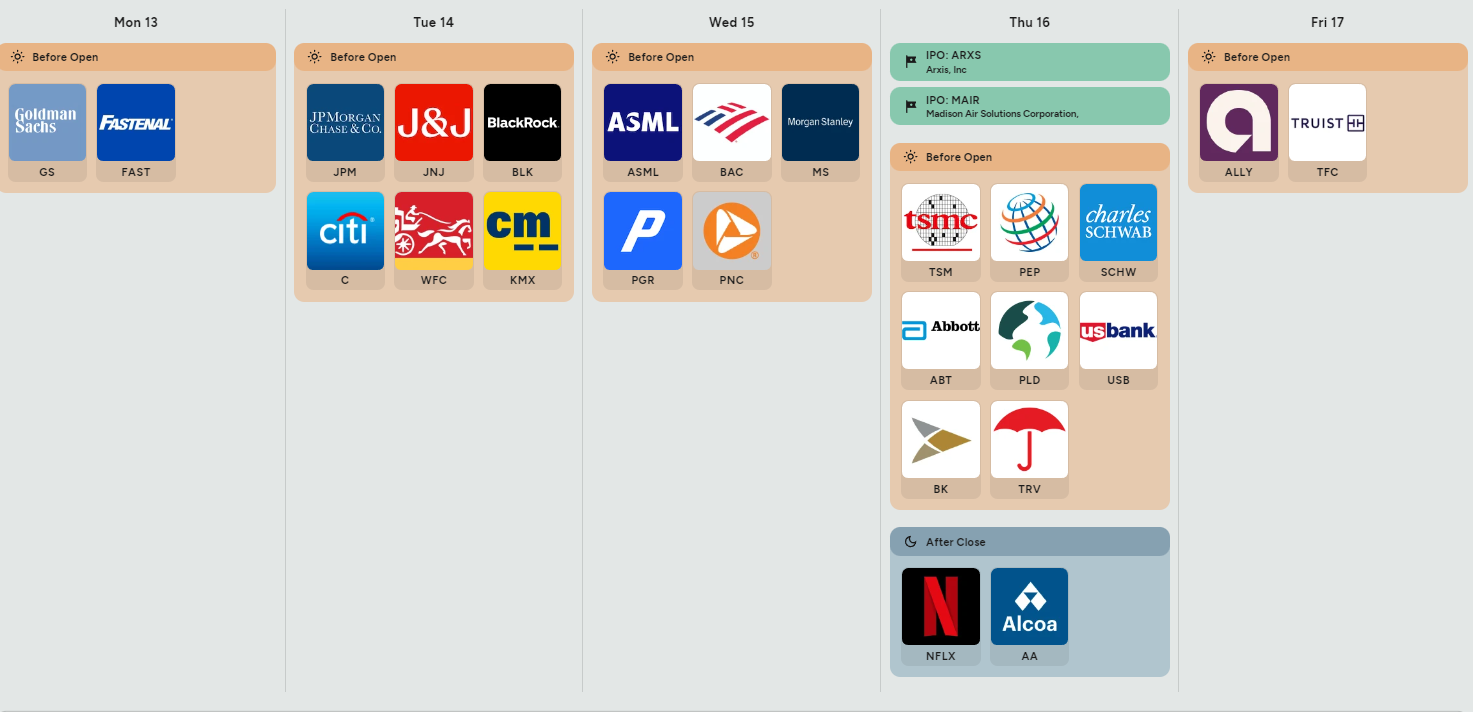
According to LSEG IBES data, S&P 500 earnings are projected to grow 14% year-over-year. If realized, this would mark the sixth consecutive quarter of double-digit growth—the longest streak since 2011.
"The market is holding up because earnings expectations remain rock-solid," noted Nick Giorgi, Chief Equity Strategist at Alpine Macro. "We haven't seen the conflict hit the fundamentals yet, but if that narrative shifts, all bets are off."
A primary concern remains the secondary effects of elevated oil prices, which threaten to squeeze corporate margins and dampen consumer spending.
Even with the recent pullback, WTI futures remain up roughly 70% year-to-date. Analysts, including Garrett Melson, suggest that bank commentary on consumer behavior will be the ultimate "canary in the coal mine" for a potential slowdown.
On the macro front, investors are bracing for the Producer Price Index (PPI) report. Last week’s CPI data showed inflation hitting 3.3% in March, the highest level since May 2024. Brent Schutte of Northwestern Mutual warned that the "permeation effect" of the energy shock will become increasingly evident the longer the war persists.
Key Economic Events This Week
Monday: OPEC Monthly Oil Market Report; IMF and World Bank Spring Meetings; U.S. March Existing Home Sales (Annualized).
Tuesday: IEA Monthly Oil Market Report; IMF World Economic Outlook Report; U.S. March NFIB Small Business Optimism Index; U.S. March PPI (YoY); Federal Reserve Board hosts "Strengthening the U.S. Economy Through Rural Investment" Forum.
Wednesday: Chicago Fed President Austan Goolsbee participates in panel discussion; Fed Governor Michael Barr delivers opening remarks at the Rural Investment Forum; ECB President Christine Lagarde delivers speech; U.S. March Import/Export Price Index (MoM); U.S. April NAHB Housing Market Index; U.S. Weekly EIA Crude Oil Inventories (ending April 10).
Thursday: G20 Finance Ministers and Central Bank Governors Meeting; Fed Governor Michelle Bowman speaks at the IIF Forum; Federal Reserve releases the Beige Book; Bank of England Governor Andrew Bailey speaks on global economic imbalances at the IMF meetings; Eurozone March CPI Final (YoY); U.S. Weekly Initial Jobless Claims (ending April 11); New York Fed President John Williams delivers speech; U.S. March Industrial Production (MoM).
Friday: ECB Executive Board Member Isabel Schnabel delivers speech; Eurozone February Current Account (Seasonally Adjusted).
Saturday: Richmond Fed President Thomas Barkin delivers speech.
Research assisted by GoAI Deep Dive.