
Trump Vows to Blockade Hormuz and Iranian Ports; Oil Prices Surge 8% on Escalation

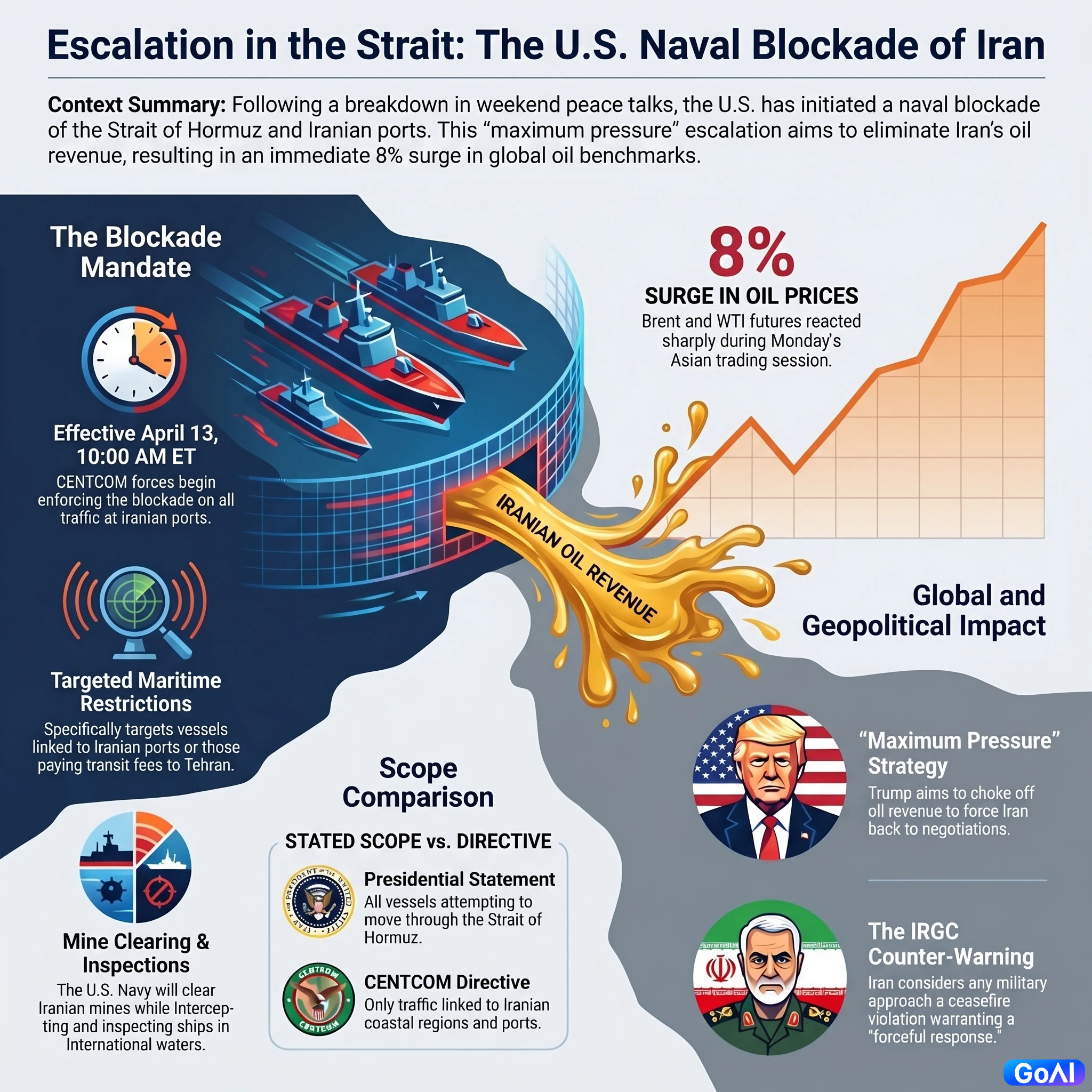
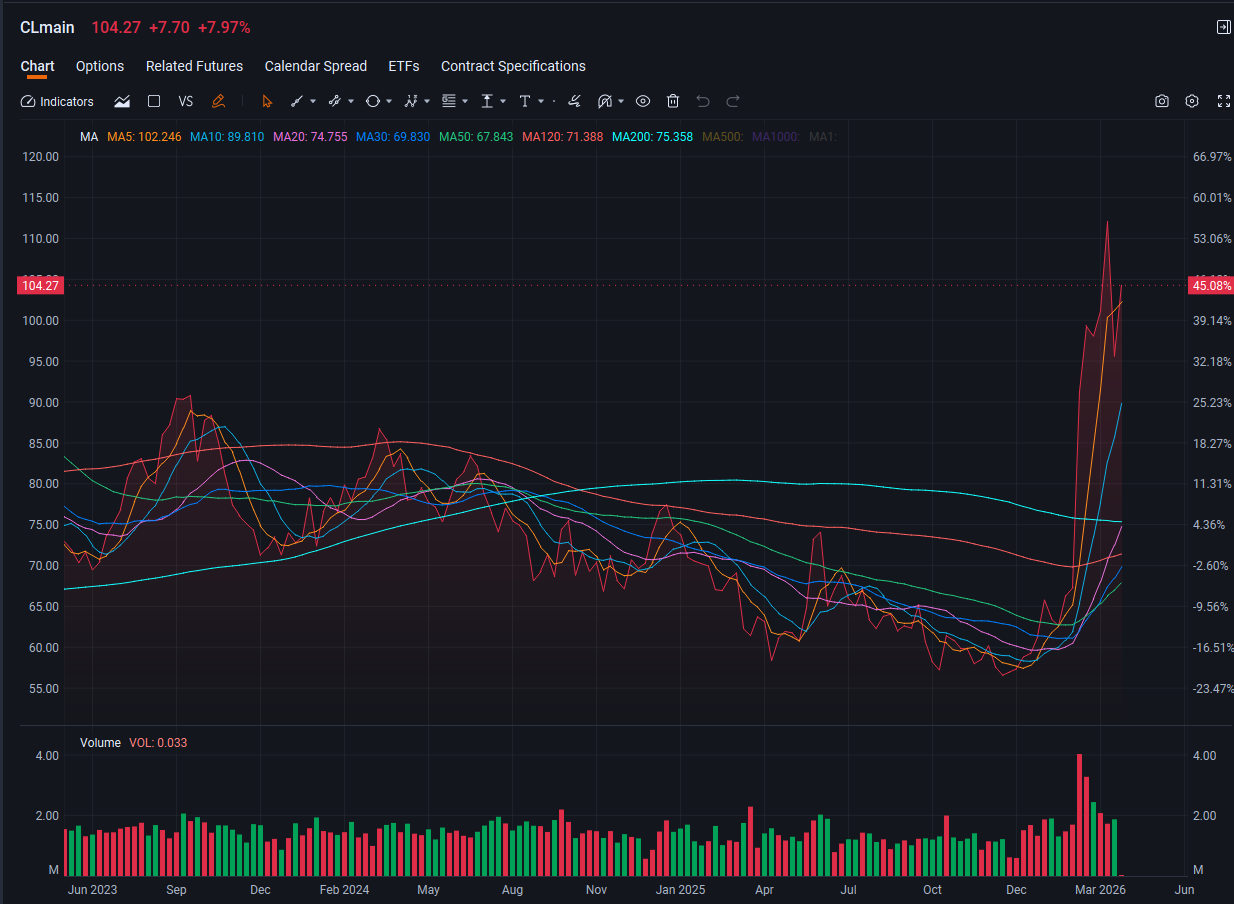
Following a "fruitless" end to weekend peace talks, tensions between Washington and Tehran have reached a fever pitch. International oil benchmarks reacted sharply during Monday’s Asian trading session, with both Brent and WTI futures surging approximately 8%.
The Trump Mandate: A Naval Blockade
Early Sunday local time, President Trump took to Truth Social to announce a major military escalation. He stated that the U.S. Navy would begin blockading all vessels attempting to enter or exit the Strait of Hormuz.
The operation aims to intercept and inspect ships in international waters, specifically targeting those paying transit fees to Tehran, while simultaneously clearing Iranian mines from the waterway.
"Effective immediately, the world’s most elite U.S. Navy will begin blockading all vessels attempting to move through the Strait of Hormuz. The blockade is starting. Other nations will join this effort. Iran must not profit from this illegal extortion," Trump posted.
Following the President’s remarks, U.S. Central Command (CENTCOM) issued a formal statement clarifying the scope of the operation. Per the presidential proclamation, CENTCOM forces will enforce a blockade on all maritime traffic entering or exiting Iranian ports starting at 10:00 AM ET on April 13.
Clarifying the Scope
While the announcement sent shockwaves through the energy markets, CENTCOM's directive appears slightly more targeted than Trump’s initial broad rhetoric.
The command clarified that the U.S. will not obstruct vessels traveling to or from non-Iranian ports.
The blockade specifically targets traffic linked to Iranian coastal regions and ports across the Persian Gulf and the Gulf of Oman. Formal "Notices to Mariners" are expected to provide further operational details to the commercial shipping industry.
The "Total Victory" Strategy
Trump framed the blockade as a necessary move to strip Iran of the economic benefits of controlling the Strait. He accused Tehran of reneging on its promise to keep the waterway open and insisted that Iran "knows how to end this situation."
In a subsequent media interview, Trump doubled down on his "maximum pressure" stance, vowing to choke off Iran's oil revenue entirely.
"The Iranians haven't left the table yet. I predict they’ll be back and give us everything we want. I’ve told my team: I want it all," Trump stated.
He also issued a chilling warning regarding Iran’s domestic infrastructure: "I hate to do it, but their water, their desalination programs, their power plants—those are very easy hits."
Tehran Strikes Back
The Iranian Navy responded late Sunday, stating it is "closely monitoring" all U.S. movements in the region. Iran's top naval commander dismissed Trump’s threats as "absurd," claiming they come from a leader who has "failed miserably in war."
Simultaneously, the Islamic Revolutionary Guard Corps (IRGC) issued its own communiqué, asserting that the Strait of Hormuz remains under its control. While the IRGC stated the passage remains open to non-military vessels under specific regulations, it issued a severe warning:
"Any approach by military vessels, under any name or pretext, will be considered a violation of the ceasefire and will be met with a severe and forceful response."