
Memory Crisis Hits Smartphone Supply Chain: Global Shipments Fall 4.1% in Q1

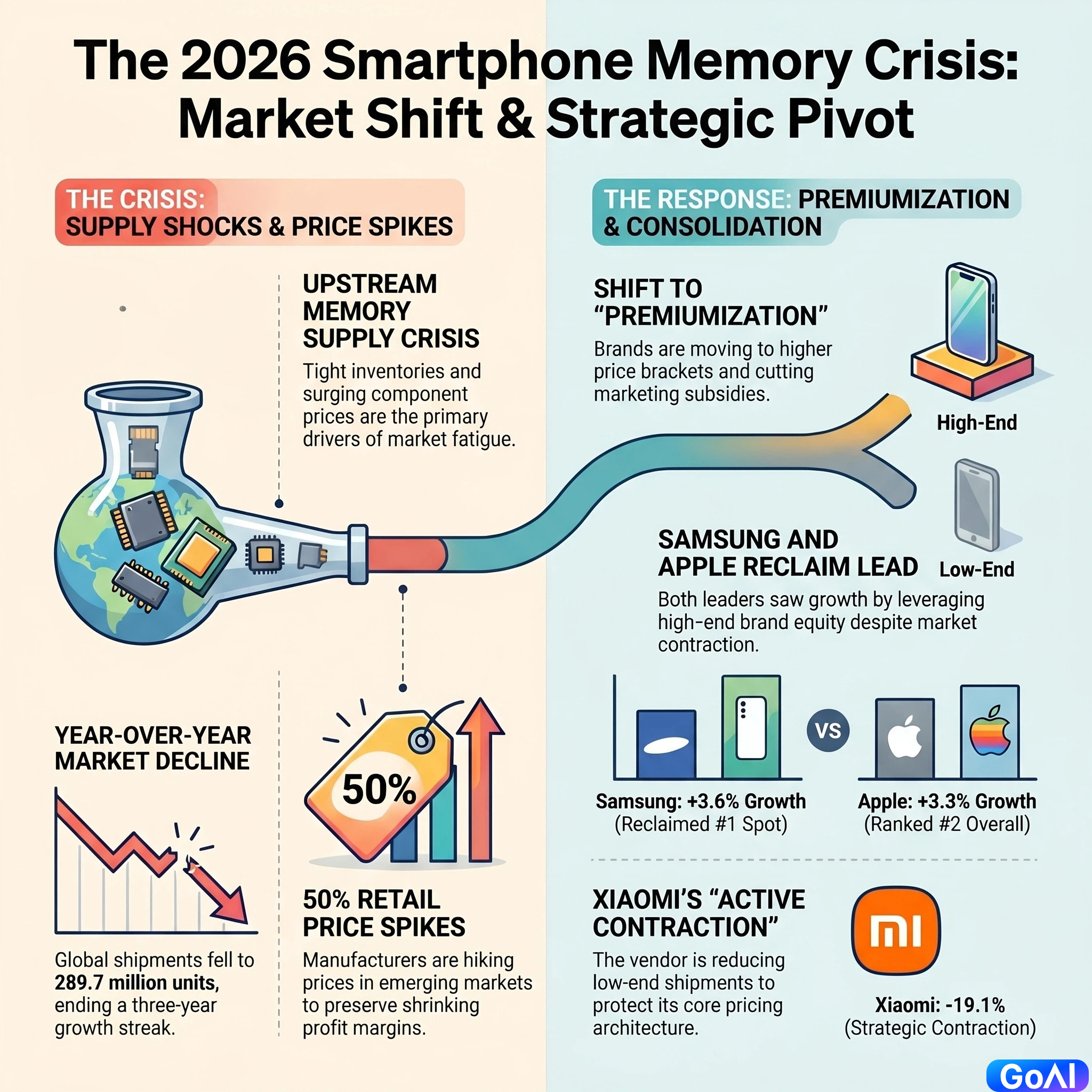
After ten consecutive quarters of expansion, the global smartphone market has finally shown signs of fatigue. IDC reported Wednesday that Q1 2026 global shipments fell 4.1% year-over-year to 289.7 million units, marking the end of a growth streak that began in mid-2023.
Industry experts view this downturn as the starting point of a new cyclical adjustment. Crucially, the primary driver is not a slump in demand but a crisis in upstream memory supply, with tightening inventories and surging component prices expected to further suppress growth throughout 2026.
The "Unprecedented" Supply Shock
IDC reaffirmed its warning that the memory shortage has triggered one of the most challenging periods in recent history. Tight supply has directly inflated cost structures, forcing manufacturers to hike retail prices to preserve margins.
In several emerging markets, these cost pressures have led to retail price spikes of 40% to 50%, significantly dampening consumer demand. Some insiders suggest the impact of this cost shock now exceeds the supply chain disruptions seen during the pandemic era.
Strategic Shifts: Premiumization and Market Consolidation
To hedge against profit pressures, manufacturers are accelerating a shift toward "premiumization." By moving into higher price brackets and cutting marketing subsidies, top-tier brands like Samsung and Apple are leveraging their brand equity to maintain profitability.
Despite the broader market contraction, Samsung reclaimed the top spot in Q1, driven by the strong performance of the Galaxy S26 Ultra, with shipments rising 3.6% to 62.8 million units. Apple followed closely in second, with iPhone 17 shipments up 3.3% to 61.1 million units.
Vendor Performance and Regional Trends
Apple: Saw significant strength in China, where sales surged over 30% year-over-year, though supply chain volatility remains a lingering risk to future growth.
Xiaomi: Ranked third but saw shipments plunge 19.1% to 33.8 million units. The company has pivoted to an "active contraction" strategy, clearing old inventory and reducing low-end shipments to protect its pricing architecture.
OPPO & vivo: Faced declines of 9.9% and 6.8%, respectively, amid the broader market slowdown.
China Domestic Market: Shipments fell 3.3% to 69 million units. Huawei maintained its domestic lead, shipping 13.7 million units, an 8.1% year-over-year increase.