
Less Than Two Months to World Cup: U.S. Hotels Slash Prices Amid Cooling Demand

The U.S. tourism industry, which had high hopes for the upcoming FIFA World Cup and the Los Angeles Olympics, is facing a period of significant anxiety.
The World Cup is set to take place from June 11 to July 19, 2026, across 11 U.S. host cities. However, due to lower-than-expected demand, hotels in many of these locations have begun "slashing" room rates.
Industry executives point to a combination of factors, including ticket price inflation and a rise in anti-American sentiment, as primary drivers of the slump.
The "Vanishing" Demand
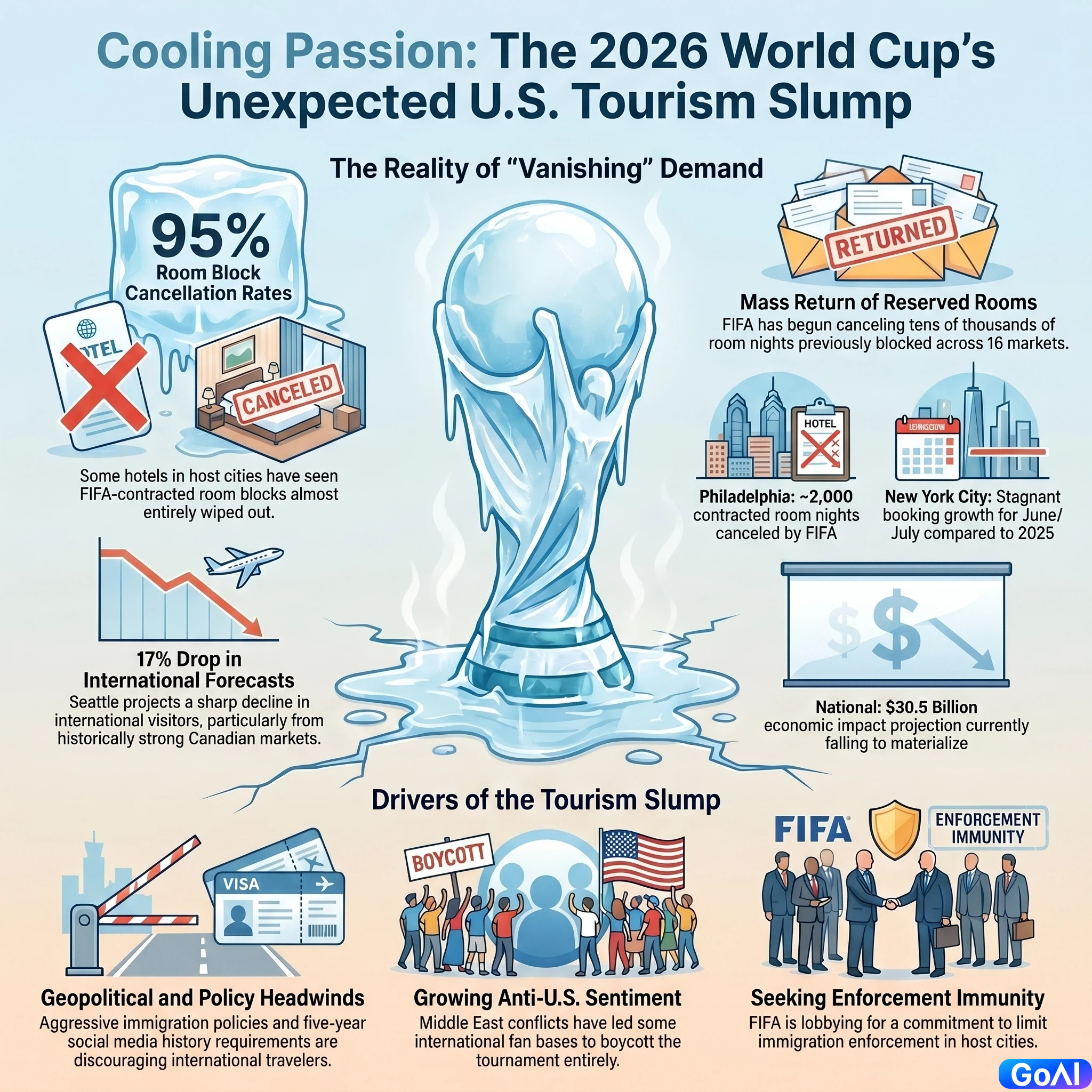
Last year, FIFA projected that millions of international visitors would generate over $30.5 billion in economic impact for the U.S. To date, that surge has failed to materialize.
Consequently, FIFA has begun canceling tens of thousands of room nights previously blocked in host cities—a move that has caught many hoteliers off guard.
In cities like Philadelphia, local hotel associations reported that FIFA canceled approximately 2,000 contracted room nights, with similar reports emerging from all 16 host markets across North America. Some hotels have seen cancellation rates for these blocks exceed 95%.
"Trump Slump" and Geopolitical Headwinds
Lior Sekler, Chief Commercial Officer of HRI Hospitality, attributes the downturn partly to the current political climate.
He cited the instability triggered by the conflict in Iran and the Trump administration’s aggressive immigration and visa policies as major deterrents for international travelers.
- Regional Declines: Seattle has projected a 17% drop in international visitors compared to initial forecasts, largely due to a sharp decrease in Canadian travelers—historically the largest source of U.S. tourism.
- Stagnant Growth: Major hubs like New York City report that hotel bookings for June and July are not showing meaningful growth compared to 2025.
- Privacy and Security Concerns: The U.S. requirement for visitors to submit five years of social media history is being viewed by many as a privacy violation, discouraging potential tourists.
Boycotts and Enforcement Fears
Growing anti-U.S. sentiment, exacerbated by Middle East conflicts, has led some fans to boycott the tournament entirely.
Additionally, there are widespread fears that the U.S. government may conduct large-scale immigration enforcement actions during the World Cup, which could disrupt the travel plans of legitimate visitors.
Reports suggest that FIFA executives have drafted a proposal for President Trump, aiming to secure a commitment that would limit immigration enforcement activities in host cities for the duration of the event to ensure a smoother experience for international fans.