
Hormuz Crisis Escales: U.S. and Iran Exchange Fire; Oil Prices Surge Over 7%

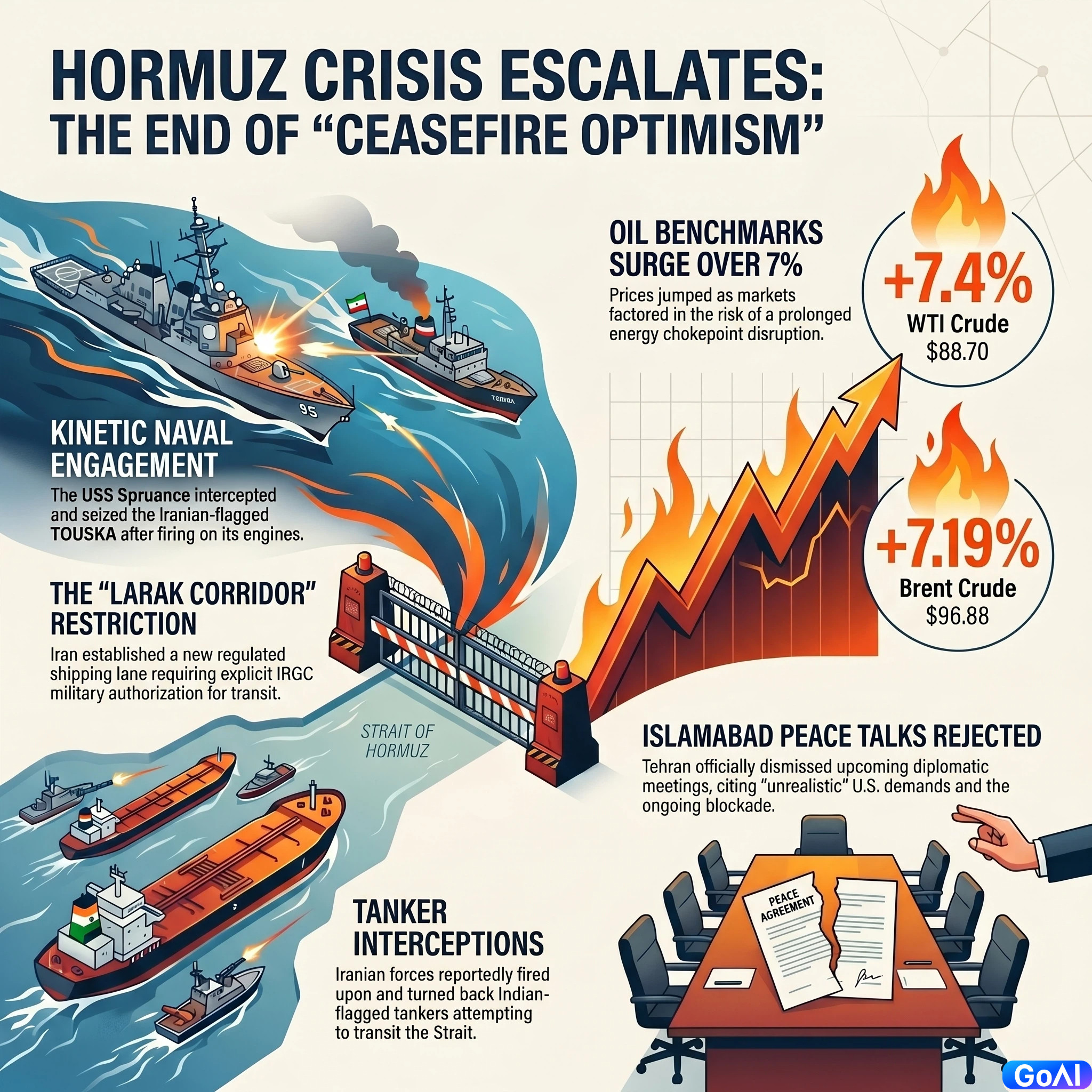
The hope for a diplomatic resolution to the Middle East conflict suffered a severe blow on Monday as the Strait of Hormuz devolved back into a kinetic combat zone.
Following reports of both U.S. and Iranian forces opening fire on merchant vessels, international oil benchmarks surged, with WTI jumping 7.4% to $88.70 and Brent climbing 7.19% to $96.88.
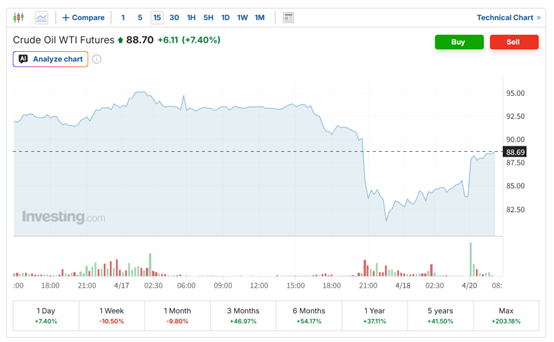
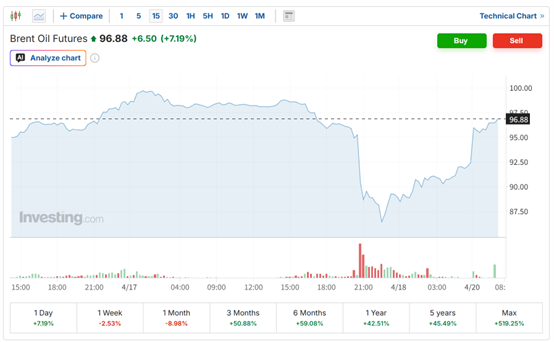
The escalation effectively ends a brief period of "ceasefire optimism" and reinforces fears of a prolonged disruption to the world’s most critical energy chokepoint.
Naval Interceptions and "Maritime Piracy"
The weekend's fragile calm shattered when the USS Spruance, a U.S. Navy guided-missile destroyer, intercepted the Iranian-flagged cargo ship TOUSKA in the Gulf of Oman.
The U.S. Account: President Trump confirmed via social media that the Navy fired on the vessel’s engine room after it repeatedly ignored orders to halt, effectively "stopping them in their tracks." U.S. Marines have since boarded and seized the ship to inspect its cargo.
The Iranian Response: Iran’s Khatam al-Anbiya Central Command condemned the act as "armed piracy" and a blatant violation of the ceasefire.
Tehran warned of "swift retaliation," claiming the merchant vessel was navigating legally when U.S. forces paralyzed its navigation systems.
This follow-up comes after reports from TankerTrackers.com indicating that the IRGC Navy had previously fired upon and forced back two Indian-flagged tankers attempting to transit the Strait earlier in the weekend.
The "Larak Corridor" and Total Closure
The Strait of Hormuz has officially returned to a state of full military restriction.
After briefly announcing a reopening last Friday, the IRGC Navy reversed course, citing the continued U.S. blockade of Iranian ports as a breach of terms.
- New Restrictions: Iran has established a new regulated shipping lane known as the "Larak Corridor" (south of Larak Island). Transit through this zone now requires explicit military authorization from the IRGC.
- Escalating Rhetoric: President Trump has ramped up his warnings, stating over the weekend that the U.S. will no longer "show restraint" and threatened to "destroy Iran’s power plants and bridges" if a permanent deal is not reached.
Diplomatic Breakdown in Islamabad
Adding to the market's anxiety, Iran has officially rejected participating in the proposed second round of peace talks in Islamabad, Pakistan.
- The Impasse: Iranian state media (IRNA) dismissed reports of an upcoming meeting as a "media game" by Washington. Tehran cited "excessive, illogical, and unrealistic demands" from the U.S., alongside the ongoing naval blockade, as the primary reasons for the breakdown.
- Outlook: With the initial two-week temporary ceasefire set to expire, the absence of a diplomatic channel has left the market bracing for further volatility. Analysts at Ned Davis Research suggest that as long as the "Hormuz blockade" remains the status quo, the risk premium on crude will remain entrenched.