
Exclusively for Nvidia: SK Hynix Begins Mass Production of Next-Gen AI Memory with 2x Bandwidth and 75% Better Power Efficiency

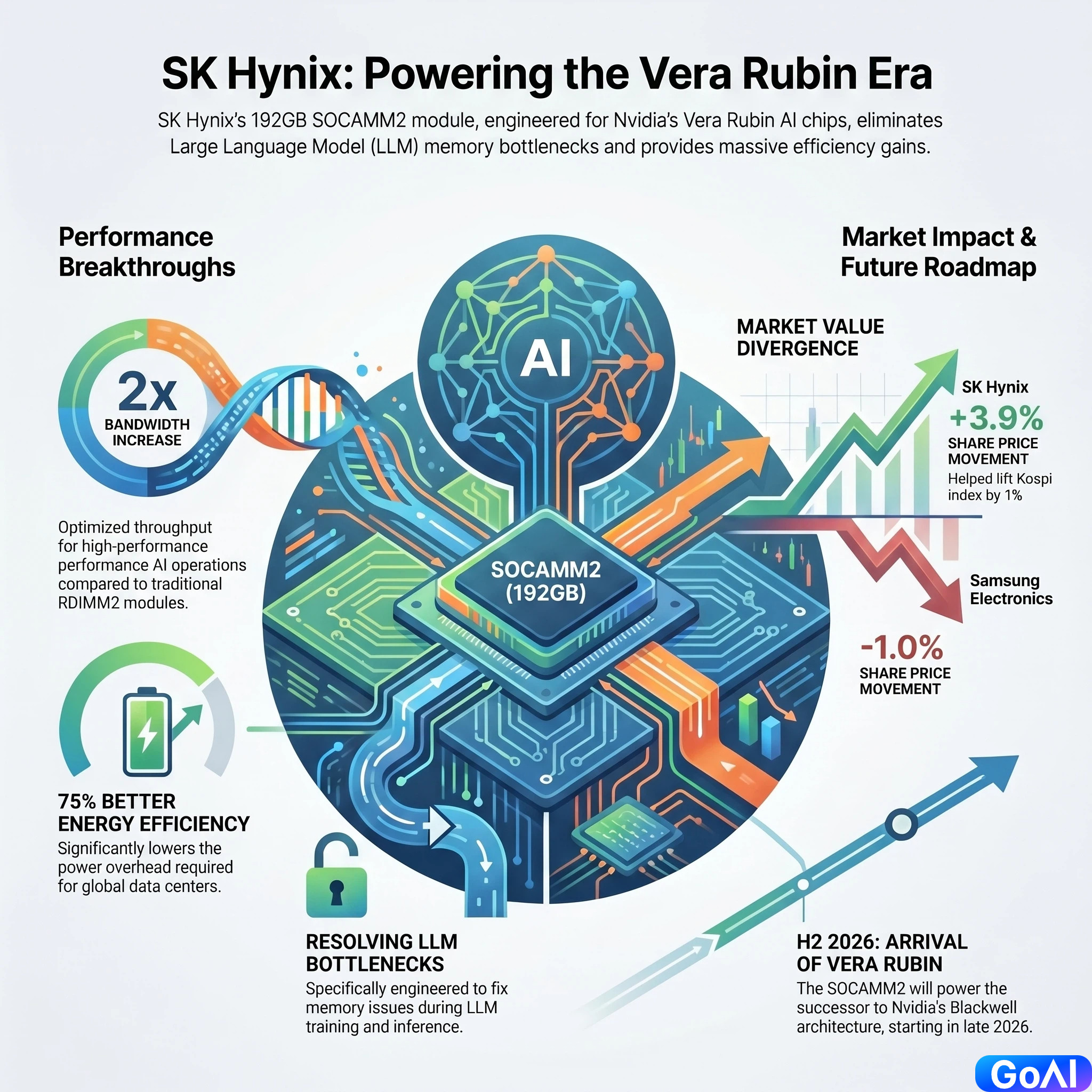
On Monday, SK Hynix announced that it has commenced mass production of its next-generation memory modules, specifically engineered for Nvidia's upcoming Vera Rubin AI chips.
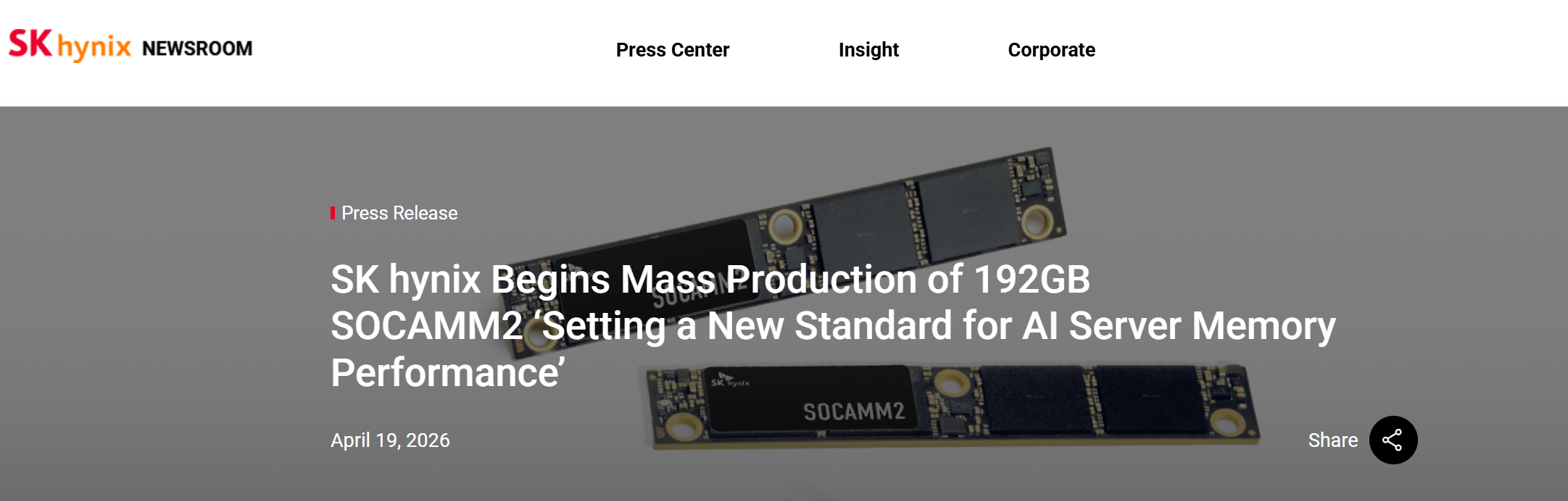
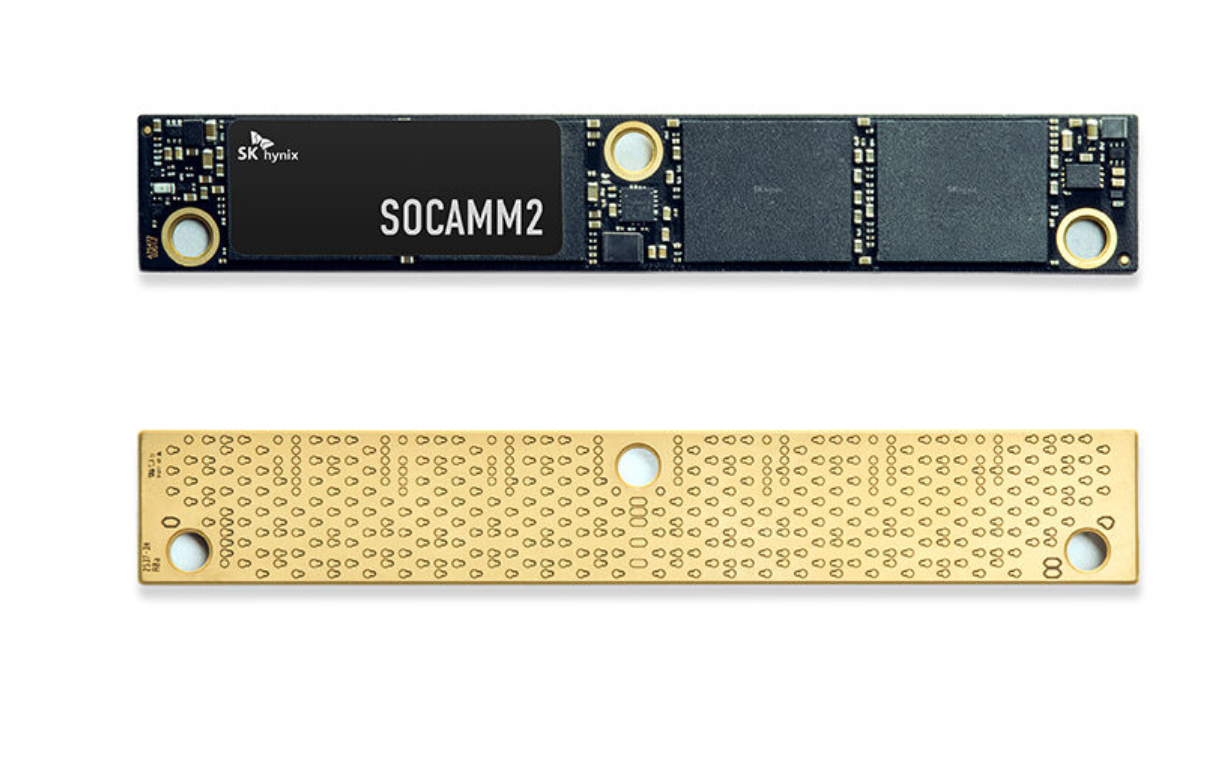
The company has started large-scale manufacturing of the 192GB SOCAMM2, a next-gen memory solution designed to deliver enhanced performance for AI servers while significantly reducing energy consumption.
In an official statement, SK Hynix confirmed that the SOCAMM2 is tailored for the Nvidia Vera Rubin platform.
The company noted that these new modules are designed to "fundamentally resolve memory bottleneck issues encountered during the training and inference of Large Language Models (LLMs)."
Technological Breakthroughs
SK Hynix highlighted that compared to traditional RDIMM2 modules, the newly mass-produced SOCAMM2 offers:
- Double the Bandwidth: Providing optimized throughput for high-performance AI operations.
- 75% Improved Energy Efficiency: Significantly lowering the power overhead for data centers.
Justin Kim, President and Chief Marketing Officer (CMO) of AI Infrastructure at SK Hynix, stated:
"By providing the 192GB SOCAMM2, SK Hynix has set a new benchmark for AI memory performance. Through close collaboration with our global AI partners, we will solidify our position as the world's most trusted provider of AI memory solutions."
Market Reaction
Following the announcement, SK Hynix shares rose 3.9% on Monday, helping lift the Kospi index by 1%.
Conversely, shares of its primary rival, Samsung Electronics, fell 1%. As the world's leading memory manufacturers, both firms have seen substantial tailwinds from the surging demand for specialized chips in the AI sector.
The Road to Vera Rubin
Nvidia unveiled the Vera Rubin processor family earlier this year as the official successor to the Blackwell architecture.
While the first batch of Rubin products is slated for delivery in the second half of 2026, recent industry reports suggest potential delays due to capacity constraints at major Nvidia suppliers and the complexities of validating next-generation HBM4 technology.