
U.S. Equities Reclaim Record Highs; Morgan Stanley Warns: Don’t Underestimate These Three Risks

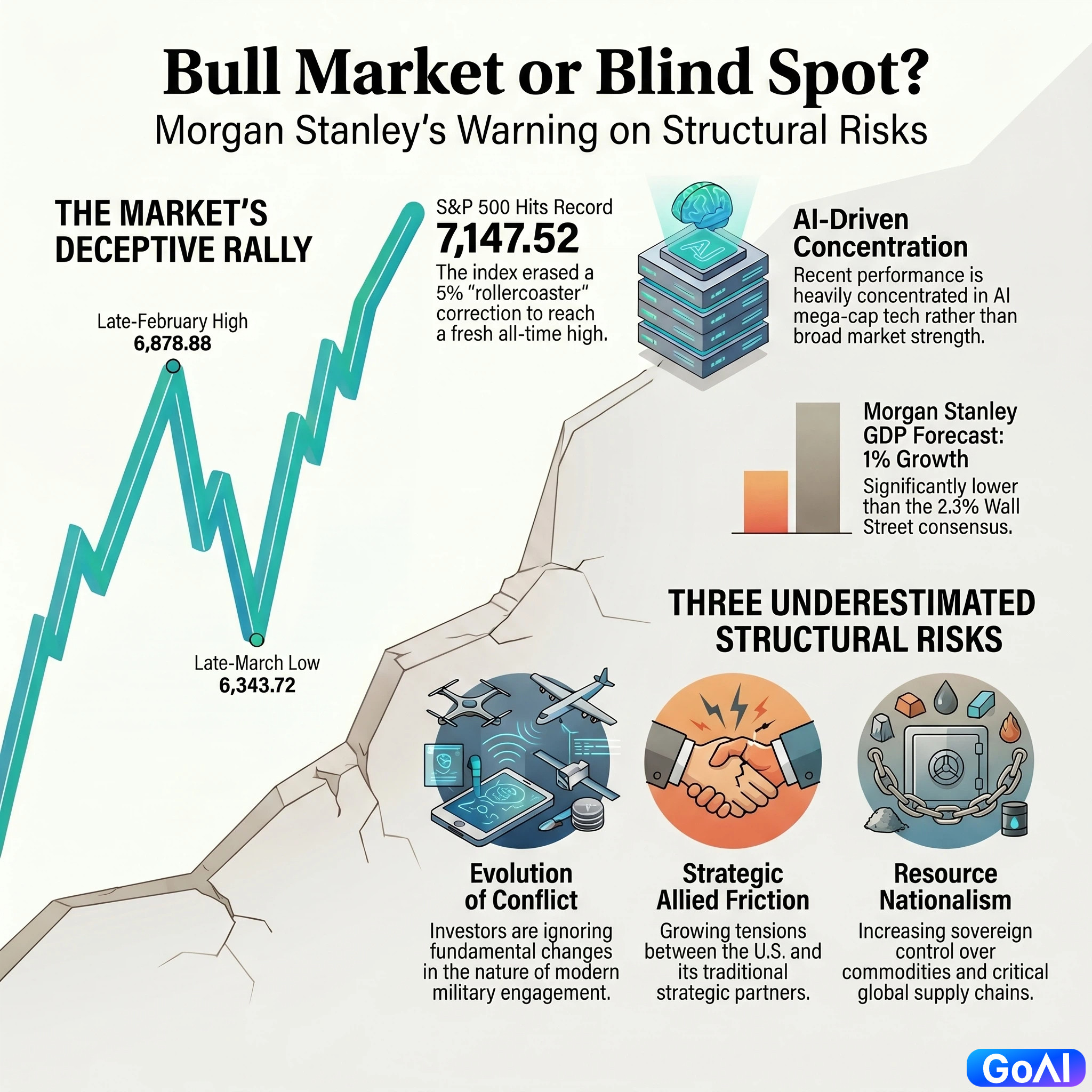
Since the onset of hostilities between the U.S., Israel, and Iran ignited conflict in the Middle East, U.S. markets have endured a dramatic six-week "rollercoaster."
The S&P 500 plummeted from a late-February high of 6,878.88 to a late-March low of 6,343.72—a correction of over 5%—before staged a rapid recovery.
As of last Friday, the index not only erased its war-induced losses but notched a fresh record close at 7,147.52.
While a new earnings season has many Wall Street firms leaning bullish, Morgan Stanley is urging caution. The bank warns that even if equities continue their near-term ascent, investors may be dangerously underestimating long-term structural threats.
Structural Risks Hidden Beneath the Surface
On Monday, Morgan Stanley Chief Investment Officer Lisa Shalett noted that while the market could potentially replicate the rally seen in 2025, current valuations suggest investors are treating inflation, interest rates, and geopolitical friction as mere "transitory" phenomena.
Shalett argues that risk premiums indicate underlying conditions "haven't changed as much as people think."
Morgan Stanley highlighted three structural shifts that could derail the investment landscape:
- The Evolution of Conflict: Fundamental changes in the nature of modern military engagement.
- Allied Friction: Growing tensions between the U.S. and its traditional strategic partners.
- Resource Nationalism: The impact of sovereign control over commodities and critical supply chains.
A Bearish Macro Outlook
The firm also issued a stern warning regarding the U.S. economy. Morgan Stanley has slashed its GDP growth forecast to just over 1%, a significantly more pessimistic outlook than the Wall Street consensus of approximately 2.3%.
While the S&P 500 has surged 12% from its March lows and the Nasdaq Composite recently matched its longest winning streak since 1992, the bank notes this performance has been heavily concentrated in AI-driven mega-cap tech.
Consequently, Morgan Stanley remains underweight on equities, favoring active management over passive indexing to navigate the shifting market regime.