
Strait of Hormuz Standoff Escalates: U.S. Gas Prices Hit Post-Conflict Peak

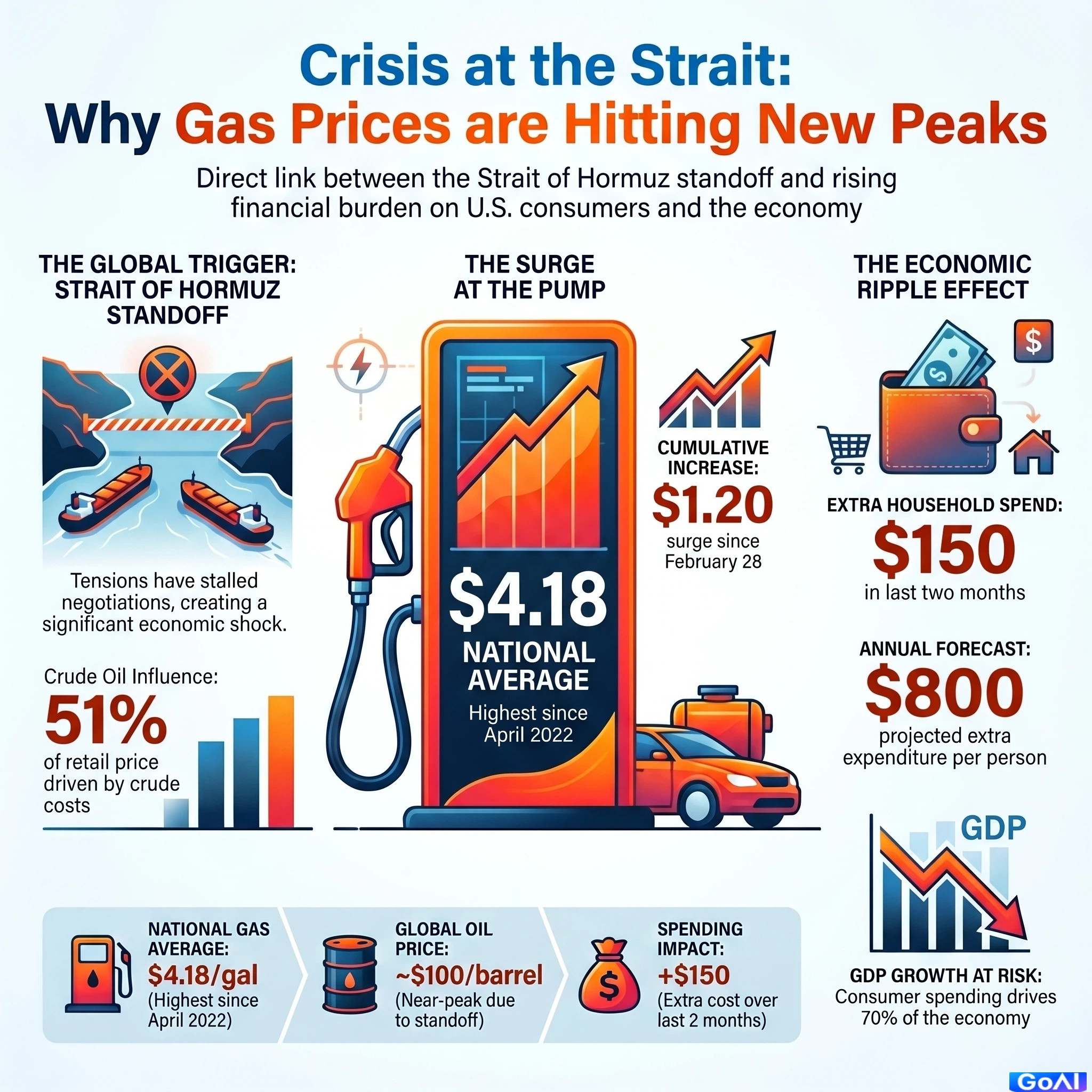
U.S. gasoline prices reached their highest level since the outbreak of the Iran conflict on Tuesday, hitting a national average of $4.18 per gallon. This figure also marks the highest price level seen since April 2022.
Key data points regarding recent price movements include:
- Cumulative Increase: National average gas prices have surged by $1.20 since February 28.
- Daily Jump: Prices on Tuesday alone climbed nearly 7 cents from the previous day.
- Trend Reversal: After briefly retreating from a peak of $4.17 on April 9 due to diplomatic progress, prices have resumed their upward trajectory as negotiations stalled.
The Role of the Strait of Hormuz
Crude oil costs account for 51% of the retail price at the pump, making the standoff in the Strait of Hormuz the primary driver of current costs. International oil prices are currently hovering near $100 per barrel.
Patrick De Haan, an oil expert at GasBuddy, noted that negotiations have essentially reached a standstill, with no viable plan to reopen the Strait. This lack of progress has allowed oil prices to claw back gains lost following the initial ceasefire announcement.
The geopolitical situation continues to intensify:
- Iranian Control: Tehran stated on Tuesday that it has achieved "absolute control" over the Strait of Hormuz.
- U.S. Stance: President Trump suggested that Iran is eager for the U.S. to "open the Strait" quickly.
- Financial Bans: The U.S. has prohibited its citizens and entities from paying any transit tolls to Iran for passage through the Strait.
Economic Impact on Consumers
Rising fuel costs represent the most significant economic shock to American households since the start of the conflict.
According to Neale Mahoney, an economics professor at Stanford University, Americans have spent an additional $150 on gasoline over the past two months compared to a sub-$3 price environment.
Mahoney forecasts that this extra expenditure could reach $800 per person by the end of the year.
Experts warn that this surge poses a serious threat to U.S. GDP growth.
Because consumer spending drives approximately 70 cents of every $1 of GDP, a reduction in discretionary spending due to high gas prices could significantly impact the broader economy.