
JGBs Plunge on Stimulus Debt Rumors; Global Investors Brace for Japanese Capital Repatriation

Japanese government bonds (JGBs) suffered a violent sell-off during the Asian session on Monday, May 18, triggering fresh anxieties across global fixed-income markets.
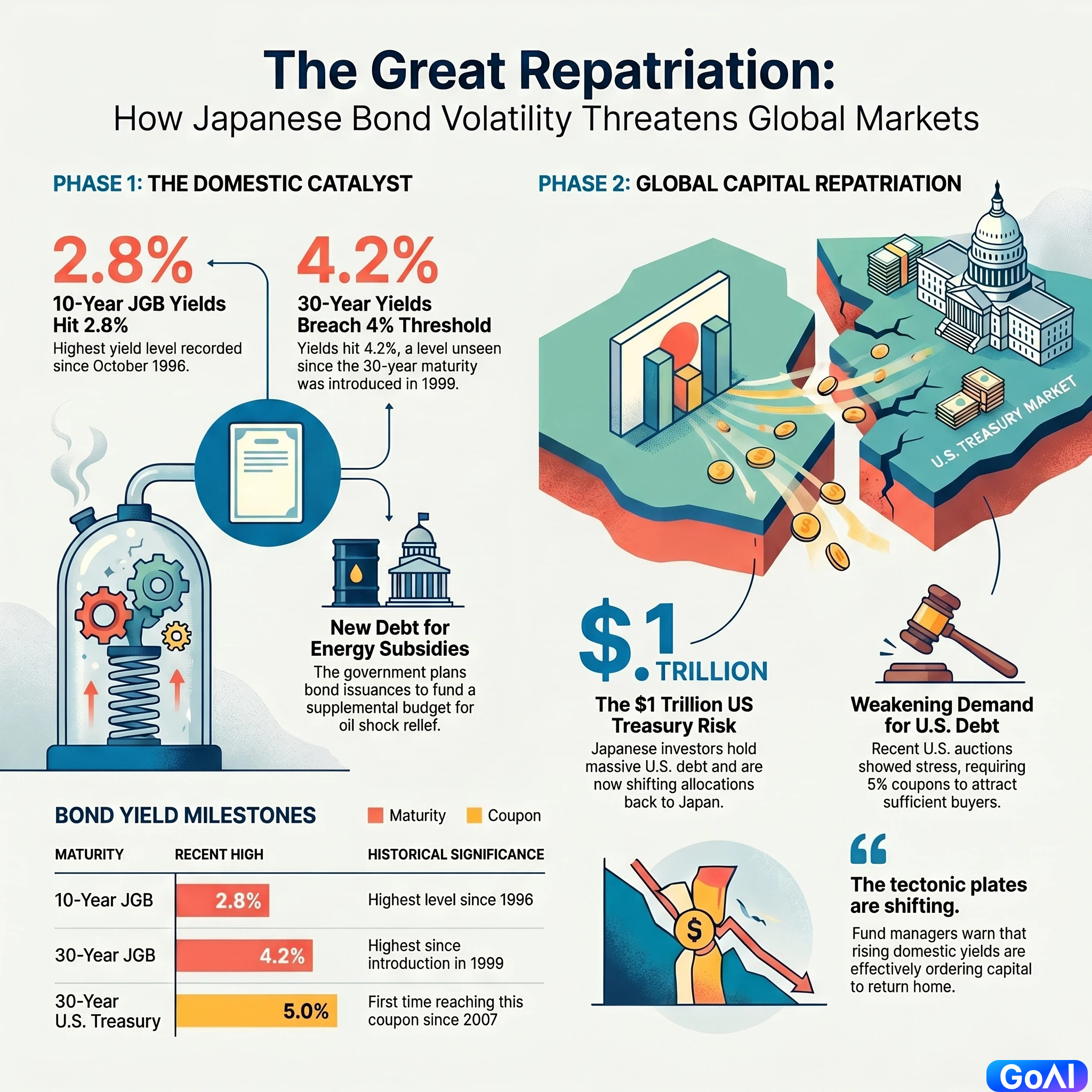
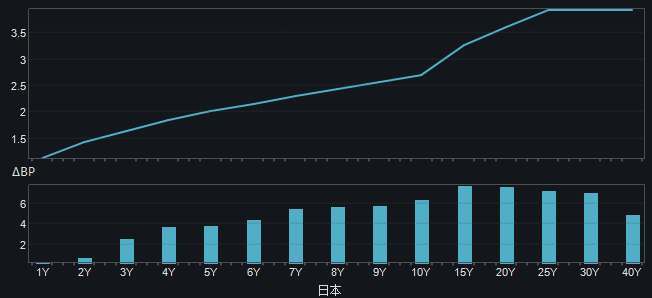
The benchmark 10-year JGB yield surged over 10 basis points early in the session to touch 2.8%, its highest level since October 1996.
Meanwhile, the 30-year JGB yield spiked nearly 20 basis points from Friday's close, breaching 4.20%.
New Debt Supply to Fund Energy Subsidies
The global bond rout, driven by fears that prolonged energy costs will entrench high inflation, was compounded in Japan by looming fiscal pressures.
According to a government source direct to the matter, the Japanese government is considering issuing new bonds to fund a supplemental budget aimed at cushioning the economic impact of the Middle East conflict.
Prime Minister Sanae Takaichi is expected to instruct her cabinet to draft the package on Monday, though its total size remains undetermined.
The emergency budget is intended to relieve households from surging fuel prices triggered by the oil shock. However, any additional debt issuance threatens to aggravate Japan’s deteriorating fiscal health and accelerate the upward trajectory of long-term yields.
The 30-year JGB yield has now breached the 4% threshold for the first time since the maturity was introduced in 1999, while the 5-year and 20-year yields also notched historic highs last week.
The Global Threat: Capital Coming Home
The historic spike in JGB yields has sparked deep concern among global investors regarding a mass repatriation of Japanese capital.
Decades of ultra-low domestic interest rates forced Japan’s massive institutional investors to hunt for yield abroad.
Consequently, Japanese investors accumulated approximately $1 trillion in U.S. Treasuries, making them the largest foreign creditor to the United States.
With domestic yields hitting multidecade highs, asset managers are increasingly betting that these offshore funds will flow back to Japan.
The repatriation trend began trickling in after the Bank of Japan lifted its policy rate to a 30-year high of 0.75% in December, and investors expect it to accelerate.
"Going forward, incremental Japanese capital will likely stay home," said Mark Dowding, Chief Investment Officer at BlueBay Asset Management, which launched its first dedicated Japanese bond fund in March.
"They won't be buying U.S. corporates or U.S. Treasuries; they will anchor their allocations in these domestic assets."
According to fund tracker EPFR, sovereign Japanese bond funds pulled in a record $700 million in March, though inflows normalized to $8600 million in April.
Spillover Risks to U.S. Treasuries
While analysts note that many domestic investors are still hesitant to buy JGBs amid intense market volatility and concerns over the Takaichi administration’s expansionist policies, the pressure is mounting.
Many view a 3% target for the 10-year JGB yield as a realistic milestone for the second half of the year.
"The tectonic plates are shifting," noted Matt Smith, a fund manager at Ruffer, who is positioned long on the Japanese Yen. "
Domestic long-term yields are rising, and the institutional framework is effectively telling investors to bring their money home.
If market turmoil hits, particularly centered around U.S. credit markets, the Yen will strengthen as Japanese investors repatriate capital."
A large-scale retreat by America's largest foreign creditor could heavily disrupt the U.S. Treasury market, forcing Washington to offer even higher yields to attract alternative buyers.
Signs of stress are already appearing. U.S. Treasury auctions showed weak demand over the past week.
The U.S. Treasury recently issued $25 billion in 30-year bonds with a 5% coupon for the first time since 2007—a stark contrast to mid-February, prior to the outbreak of the war, when a 30-year auction recorded historic demand.