
Wall Street Strategist Sounds the Alarm: Jackson Hole Poses Greater Risk Than Nvidia Earnings

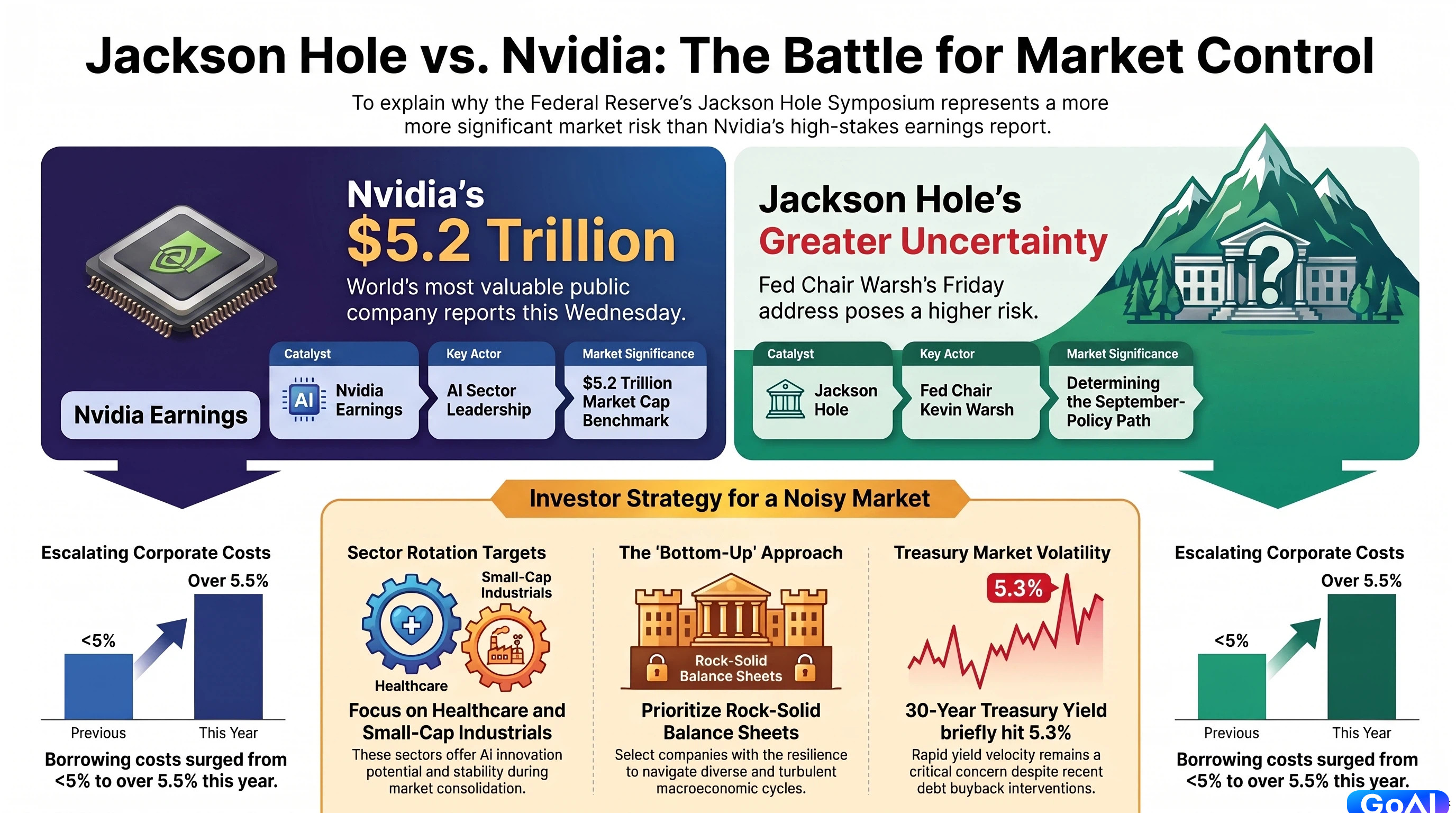
Wall Street investors should be far more concerned about the implications of this week's Jackson Hole Economic Symposium than the upcoming quarterly results from artificial intelligence leader Nvidia, Ann Miletti, Head of Active Equity at Allspring Global Investments, warned over the weekend.
In an interview, Miletti advised market participants to temper expectations heading into the annual policy forum hosted by the Federal Reserve Bank of Kansas City, where Fed Chair Kevin Warsh is scheduled to deliver a keynote address on August 28.
Warsh’s speech comes two days after Nvidia—the world's most valuable public company with a $5.2 trillion market capitalization—reports quarterly earnings following Wednesday's closing bell.
Without question, Nvidia's earnings and the Jackson Hole conference represent the twin focal points commanding Wall Street's attention this week.
However, Miletti argues that the policy trajectory from the Federal Reserve presents substantially greater uncertainty.
Long-duration U.S. Treasury yields have climbed steadily since last month's FOMC meeting, where Warsh’s post-decision commentary left a growing cohort of traders questioning the central bank’s resolve in curbing inflation.
According to the official schedule, Warsh will deliver his maiden Jackson Hole address as Fed Chair on the economic outlook at 10:00 AM Eastern Time on Friday.
During the press conference following the July FOMC meeting, Warsh noted that he had yet to finalize the theme of his Jackson Hole remarks—whether to adopt a broad macroeconomic narrative or follow the traditional framework of laying groundwork for the September through December policy path.
However, he indicated an intent to table significant structural macro issues amid the symposium's Wyoming setting.
Miletti highlighted that corporate borrowing costs in the U.S. have escalated from below 5% at the start of the year to north of 5.5%.
While the absolute level is not extreme by historical standards, the velocity and magnitude of the increase remain critical concerns—especially given the current scale of corporate capital expenditures.
Turbulence across the sovereign bond market has amplified these anxieties: the 30-year Treasury yield briefly crossed 5.3% last week before Treasury Secretary Scott Bessent moved to double planned long-duration debt buybacks to $4 billion.
While that intervention sparked a brief sentiment bounce, it failed to deliver lasting relief to the market.
Constructive on Healthcare and Small-Cap Industrials
Addressing equity market positioning, Miletti noted that following July's market pullback, she "would not mind seeing a bit more" consolidation, arguing that further correction would leave equities on firmer footing to maintain stability through the remainder of the year.
She identified healthcare and small-cap industrial shares as her preferred allocations. While healthcare has underperformed broad benchmarks, capital rotation has begun to surface as investors recognize the sector's potential for AI-enabled innovation.
"In a noisy market environment like this, we always try to focus on what we can control," Miletti remarked.
"Looking at companies from the bottom up to identify those with rock-solid balance sheets and the resilience to navigate diverse macroeconomic cycles—that is our core focus, and the only factor within our direct control."