
Global Highlights for This Week: Central Bank Decisions and Middle East Tensions Drive Markets as Fed Rate Suspense Looms

U.S. equities rebounded on Friday, but the three major benchmarks still posted weekly losses. Elevated international crude prices, driven by escalating tensions in the Middle East, lifted U.S. inflation expectations and weighed broadly on equity performance.
Market analysts note that sticky inflation keeps the Federal Reserve under pressure to hike rates. The CME FedWatch Tool indicates that markets are currently pricing in an 87.3% implied probability of a 25-basis-point rate increase on Wednesday.
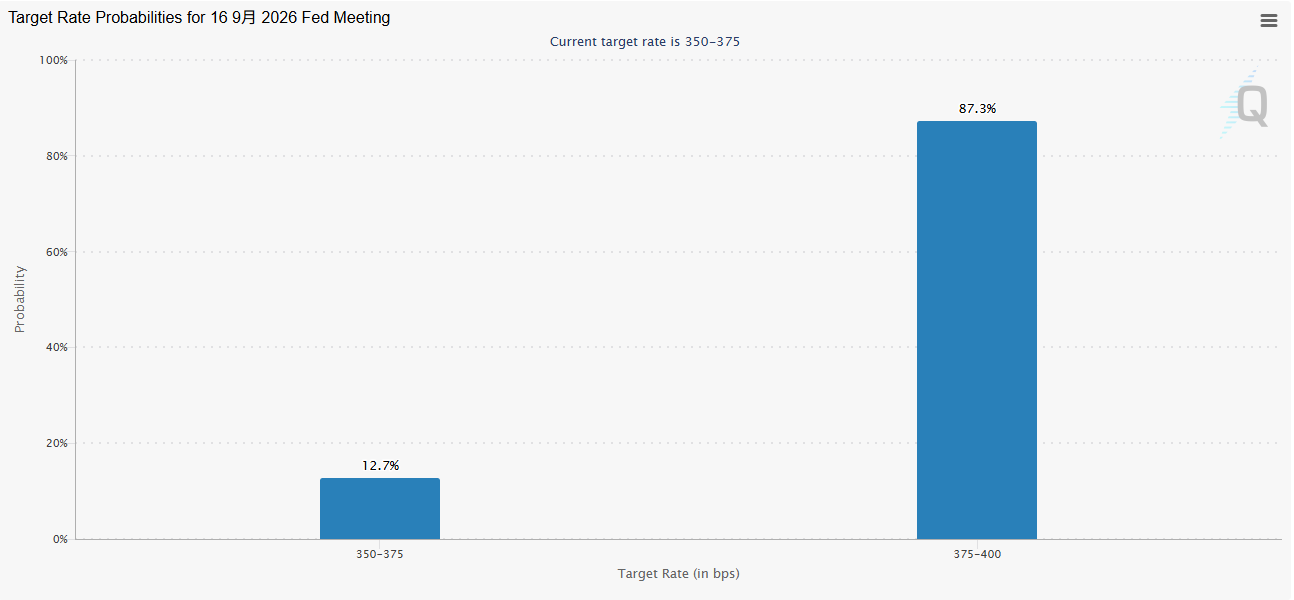
That probability has swung over recent weeks as traders digested incoming economic prints and commentary from Fed officials. Alicia Levine, Chief Investment Officer at BNY Wealth, remarked, "The scale has now tipped toward a hike."
Bret Kenwell, an analyst at eToro, acknowledged that a rate increase is now difficult to avoid, but emphasized that the critical question centers on what follows: "If the hike is framed as an insurance move against resurgent inflation rather than the onset of an extended tightening cycle, the market may interpret it as a 'dovish hike.'"
Conversely, BNY Wealth's Levine warned, "If the Fed signals an ongoing hiking cycle—saying, for instance, 'we still have work to do'—that would not bode well for financial markets."
Analysts warn that rate hikes and climbing Treasury yields could trigger cross-asset ripples. Rate-sensitive sectors, such as small-cap equities, face heightened downside pressure given their heavier reliance on floating-rate and short-term debt financing.
Beyond the Fed, the Bank of England and the Bank of Japan are also slated to deliver interest rate decisions. Earlier last week, the European Central Bank lifted its three key policy rates by 25 basis points, with markets widely expecting the BoE to follow suit.
Reports over the weekend suggested the Bank of Japan is likewise positioning to raise rates at its policy meeting this week, with a 25-basis-point hike seen as the most probable outcome. Earlier last week, U.S. Treasury Secretary Scott Bessent remarked that he possessed "a fairly deep understanding of what the BOJ intends to do."
On the geopolitical front, Iranian Foreign Ministry spokesman Esmaeil Baghaei noted that Iran and Oman plan to brief Gulf nations on Monday (September 14) regarding bilateral consultations over shipping transit through the Strait of Hormuz.
Iranian President Masoud Pezeshkian stated that Tehran is "currently unable to make a decision" regarding direct negotiations with Washington, stressing that the U.S. must first lift its blockade. He added that should the blockade end, the Strait of Hormuz will reopen to transit.
Key Global Economic Events This Week:
Monday (September 14): Keynote speech by ECB Executive Board Member Isabel Schnabel; Canada August CPI (MoM); remarks by ECB Executive Board Member Piero Cipollone.
Tuesday (September 15): Eurozone September ZEW Economic Sentiment Index; U.S. September Empire State Manufacturing Index.
Wednesday (September 16): European Commission President Ursula von der Leyen delivers the State of the Union address; Eurozone July Industrial Production (MoM); address by ECB Vice-President Boris Vujčić; U.S. August Retail Sales (MoM); U.S. August Import/Export Price Indexes; EIA Weekly Crude Oil Stockpiles (week ending Sept 11).
Thursday (September 17): Bank of Canada publishes Monetary Policy Meeting Minutes; FOMC Rate Decision and Summary of Economic Projections (SEP); Eurozone August Final CPI (YoY); Bank of England Rate Decision and Meeting Minutes; U.S. Initial Jobless Claims (week ending Sept 12); U.S. August Housing Starts (Annualized); U.S. September Philadelphia Fed Manufacturing Index; U.S. August Pending Home Sales (MoM); U.S. SEC hosts roundtable on 24-hour trading.
Friday (September 18): Japan August Core CPI (YoY); Bank of Japan Rate Decision; U.S. August Industrial Production (MoM); U.S. August Conference Board Leading Economic Index (MoM).