
AI Begins to Fracture the Global Economy: U.S. Reaps the Dividend While Europe Languishes

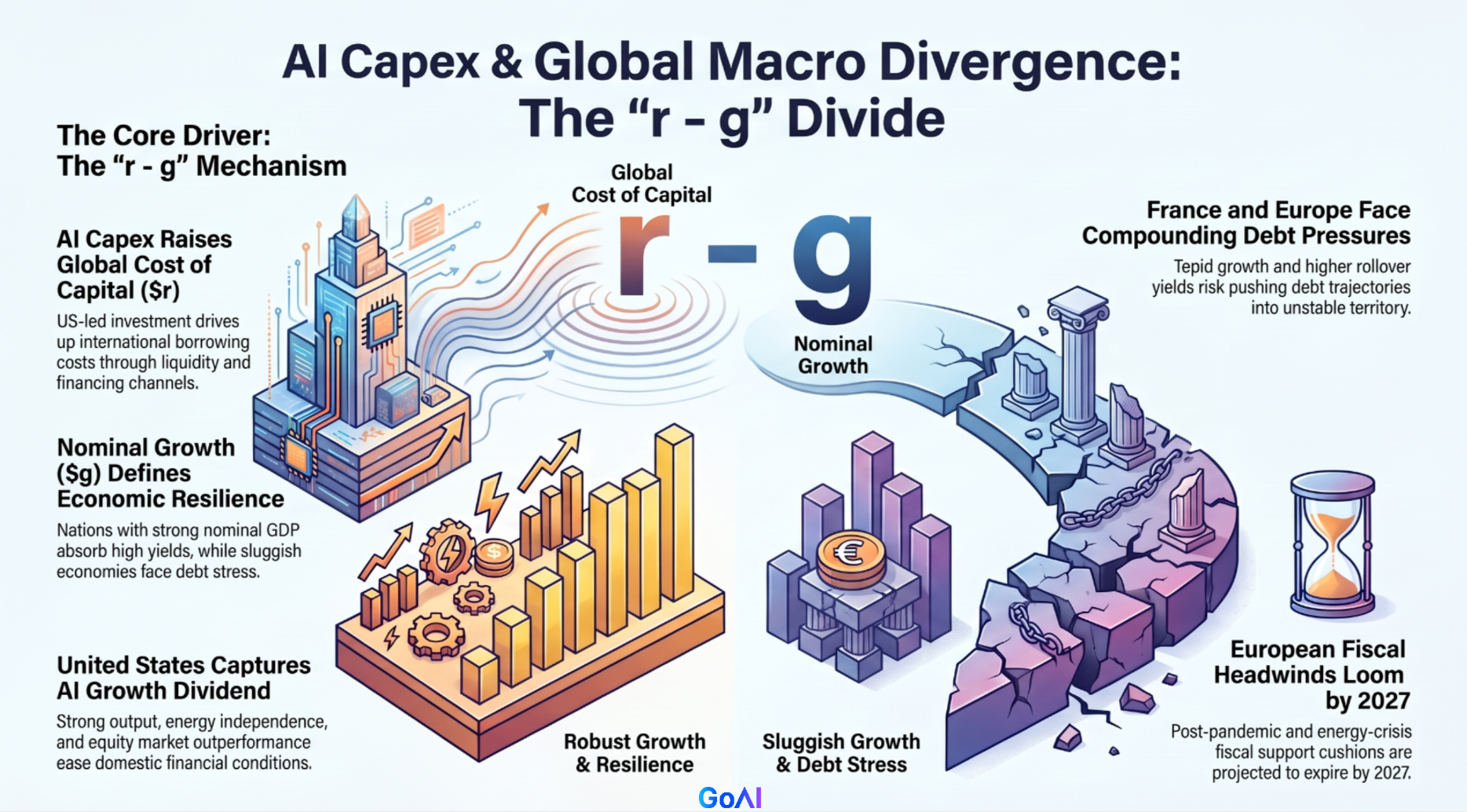
Artificial intelligence is actively widening the fault lines across the global macro landscape, driving an expanding divergence between economic winners and losers.
From internal bifurcation within the U.S. economy to the widening growth gap across sovereign borders, the structural footprint of the AI revolution is increasingly unmistakable.
Crucially, the ongoing wave of AI capital expenditures is pushing up the global cost of capital via cross-border financing demands, liquidity crowding-out, and macro spillover channels. However, the economic gains catalyzed by this investment boom are being distributed with stark asymmetry.
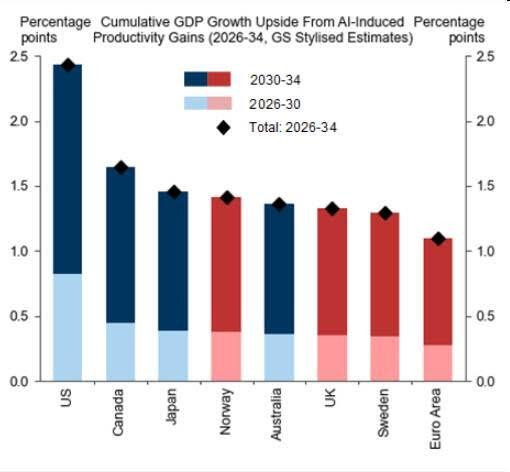
As Goldman Sachs macro trader Rikin Shah underscored in a recent research note, the United States stands as the clear victor in this AI cycle, whereas Europe does not.
France—caught in the crosshairs of a fierce sovereign debt selloff over the past week—offers a textbook case: against a structurally higher rate regime, economies with weaker nominal output face compounding growth and debt-servicing pressures.
In Shah’s view, the distinction between winners and losers in the AI era is no longer confined to equity indices; it is fast becoming a pivotal macroeconomic macro theme.
The AI capex supercycle is predominantly driven by the U.S., yet it elevates the cost of capital globally. Economies boasting robust nominal GDP growth are inherently better positioned to absorb the drag of elevated rates, whereas sluggish economies remain acutely vulnerable.
At its core, Shah argues, the crux lies in the "r - g" metric—the differential between real borrowing costs ($r$) and nominal growth ($g$).
The "r - g" Dynamic: Divergence in Debt Sustainability
While the U.S. shoulders a massive debt stock and wide fiscal deficits, vigorous nominal growth continues to anchor its macro foundation. By contrast, France faces a decidedly adverse debt trajectory amid the higher-for-longer rate backdrop.
France enters this regime from an already fragile baseline: elevated public leverage, wide fiscal deficits showing little sign of rapid consolidation, and tepid nominal output.
Currently, France’s "r - g" spread hovers around parity. However, the marginal cost of new sovereign debt issuance now runs roughly 250 basis points above the effective interest rate on its existing debt stock.
As maturing obligations are rolled over at prevailing elevated yields, the average financing cost of France's debt burden will steadily drift higher. This dynamic threatens to push the "r - g" balance into negative territory, ratcheting up stress on debt sustainability.
Nominal growth has thus become the decisive arbiter of how debt burdens impact sovereign balance sheets.
Ultimately, the question pivots on which nations can genuinely monetize the growth dividend unlocked by AI capex, versus those left merely bearing the weight of a higher global discount rate.
Financial Conditions and Compounding Asymmetries
The actual performance wedge between Europe and the U.S. may prove considerably wider than baseline productivity models suggest.
Traditional projections typically isolate supply-side productivity gains while overlooking crucial feedback loops: if U.S. equities continue their structural outperformance relative to international peers, the resulting wealth effect and corporate valuation premiums further ease U.S. financial conditions (FCI), providing an additional cyclical tailwind to growth.
Shah emphasizes that, by contrast, Europe is set to lag significantly in capturing the direct growth dividend of artificial intelligence.
Furthermore, any renewed widening in sovereign bond spreads risks tightening European financial conditions, erecting fresh barriers to expansion. Europe also remains far more exposed to volatile energy input costs than the resource-independent U.S.
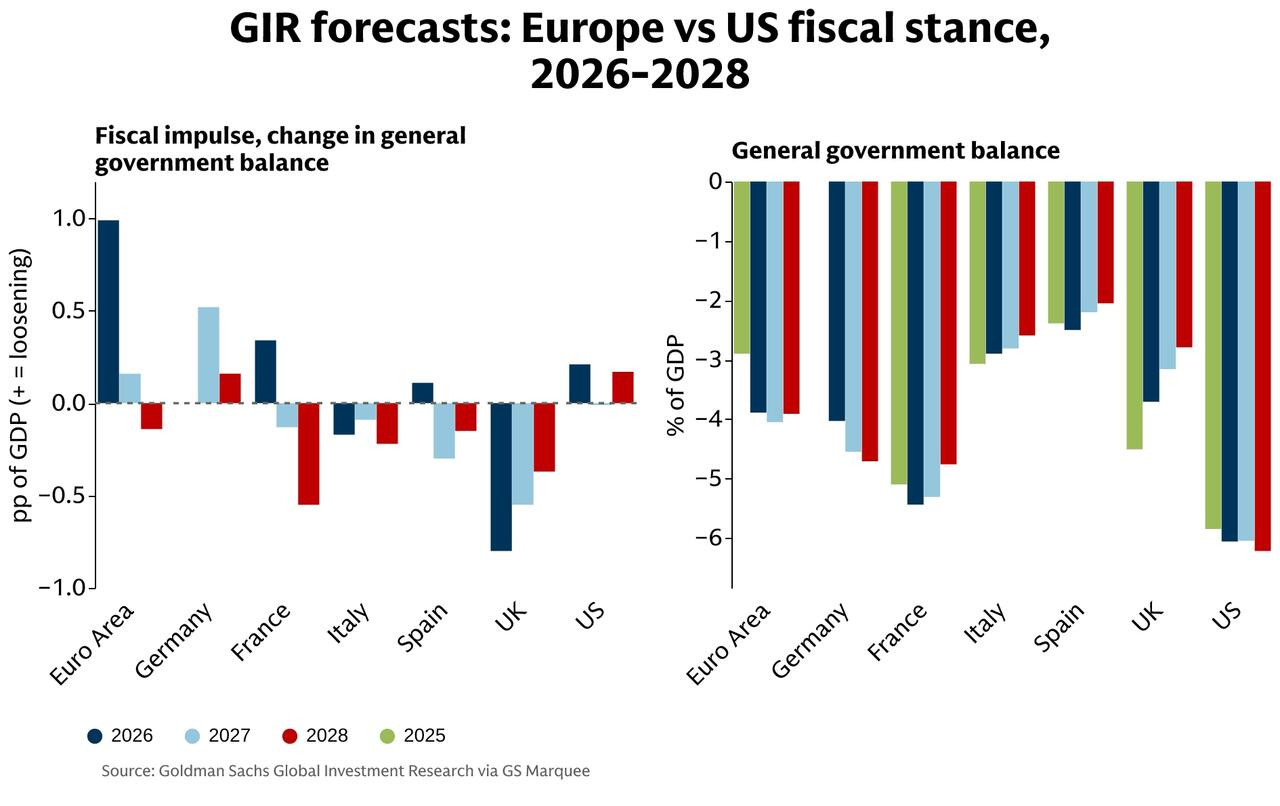
While fiscal stimulus has provided a critical floor for European output year-to-date, that support is projected to fade in 2027 as post-pandemic and energy-crisis fiscal cushions expire.
Macro Implications
The United States stands as the preeminent beneficiary of the artificial intelligence boom, while Europe struggles to capture comparable growth momentum.
Facing elevated interest rates and fading fiscal impulse, the European macro backdrop is likely to remain under persistent pressure.
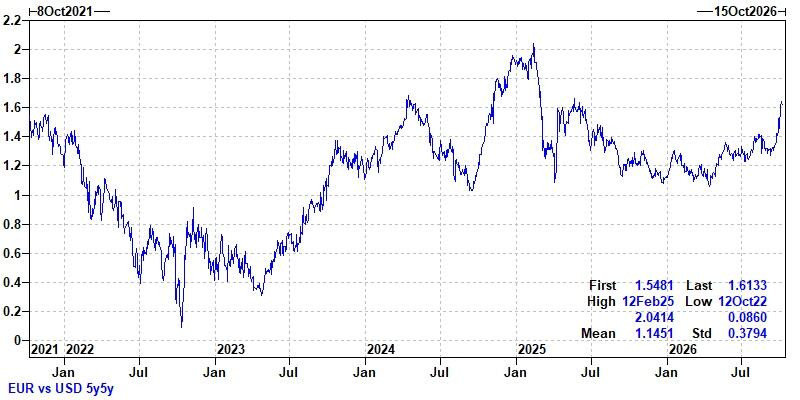
Fixed income and foreign exchange markets have already begun pricing this structural divergence. While chasing the theme at current market levels requires tactical caution, this macroeconomic realignment remains far from over.