
Why Did Samsung’s Shares Fall Despite Record Profits?”

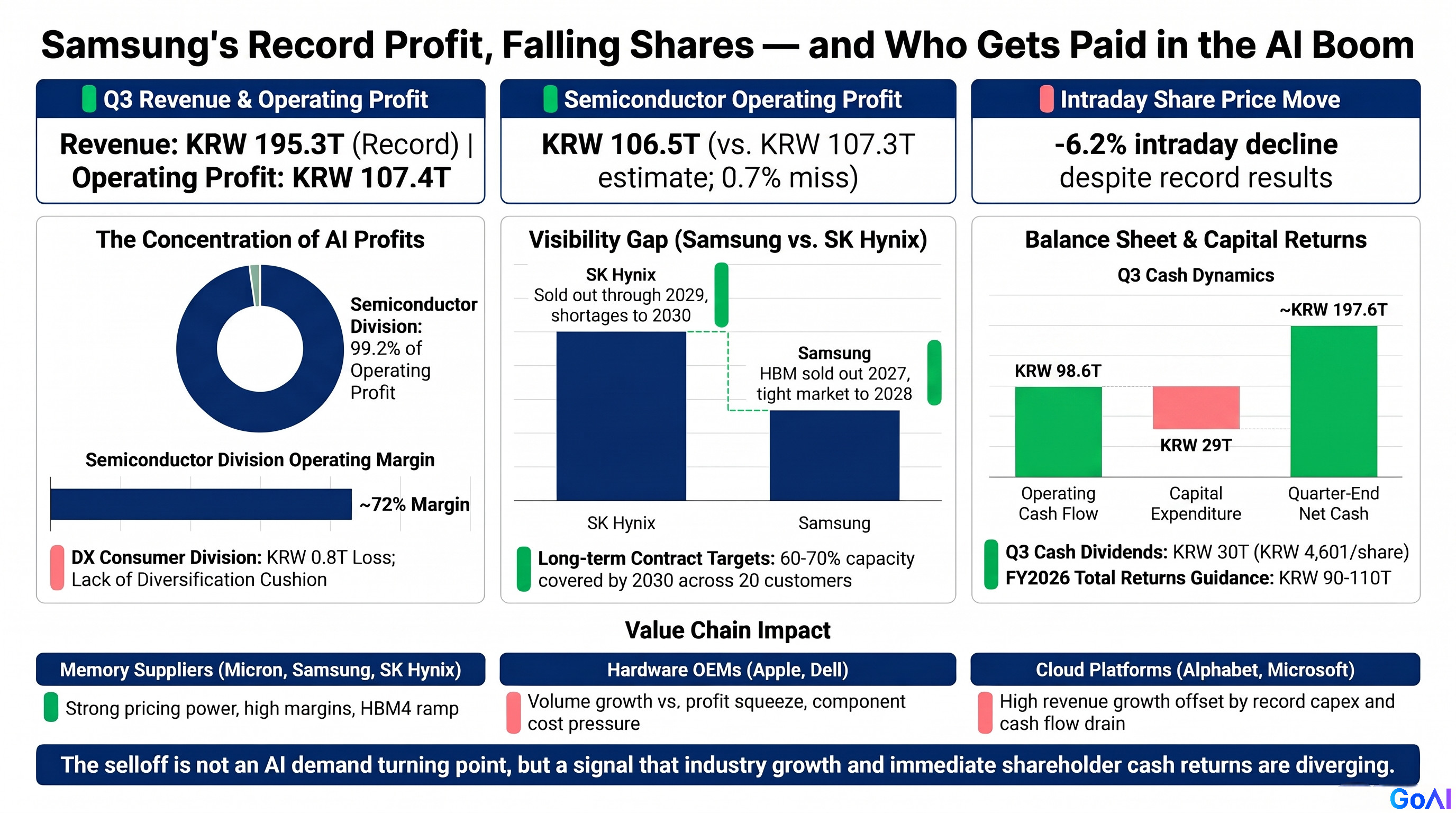
Samsung Electronics reported record third-quarter revenue of KRW 195.3 trillion and operating profit of KRW 107.4 trillion.
Yet its common shares on the Korea Exchange, ticker 005930, closed at KRW 232,000 on October 29, down KRW 10,000, or 4.13%, from the previous session. Record profits and a lower closing share price sent a clear message: the results were impressive, but not impressive enough to persuade investors to pay more.
The easy explanation is that semiconductor earnings slightly missed expectations. It is also incomplete. The more important debate is how long profits at this level can last—and how much of the money will ultimately reach shareholders.
GoAI’s view is straightforward: Samsung’s selloff is not evidence that AI memory demand has peaked. It is evidence that investors are applying a tougher test to earnings durability and capital allocation.
For U.S. equities, this is a differentiation signal: supportive of Micron’s near-term earnings case, but harder to ignore for hardware and cloud companies facing rising costs and slower cash recovery.
A Profit Miss of Less Than 1%. Shares Closed Down 4.13%
Samsung’s semiconductor division earned KRW 106.5 trillion in operating profit, against the KRW 107.3 trillion analyst estimate compiled by LSEG—a shortfall of roughly 0.7%.
The group’s KRW 107.4 trillion operating profit had already been disclosed in its earlier earnings guidance. The final results did not deliver another surprise in the headline number.
But the entire selloff cannot reasonably be pinned on that small earnings gap. A day earlie…