
Watch Out: Are U.S. Retail Investors Piling Back Into Rate-Sensitive Stocks?

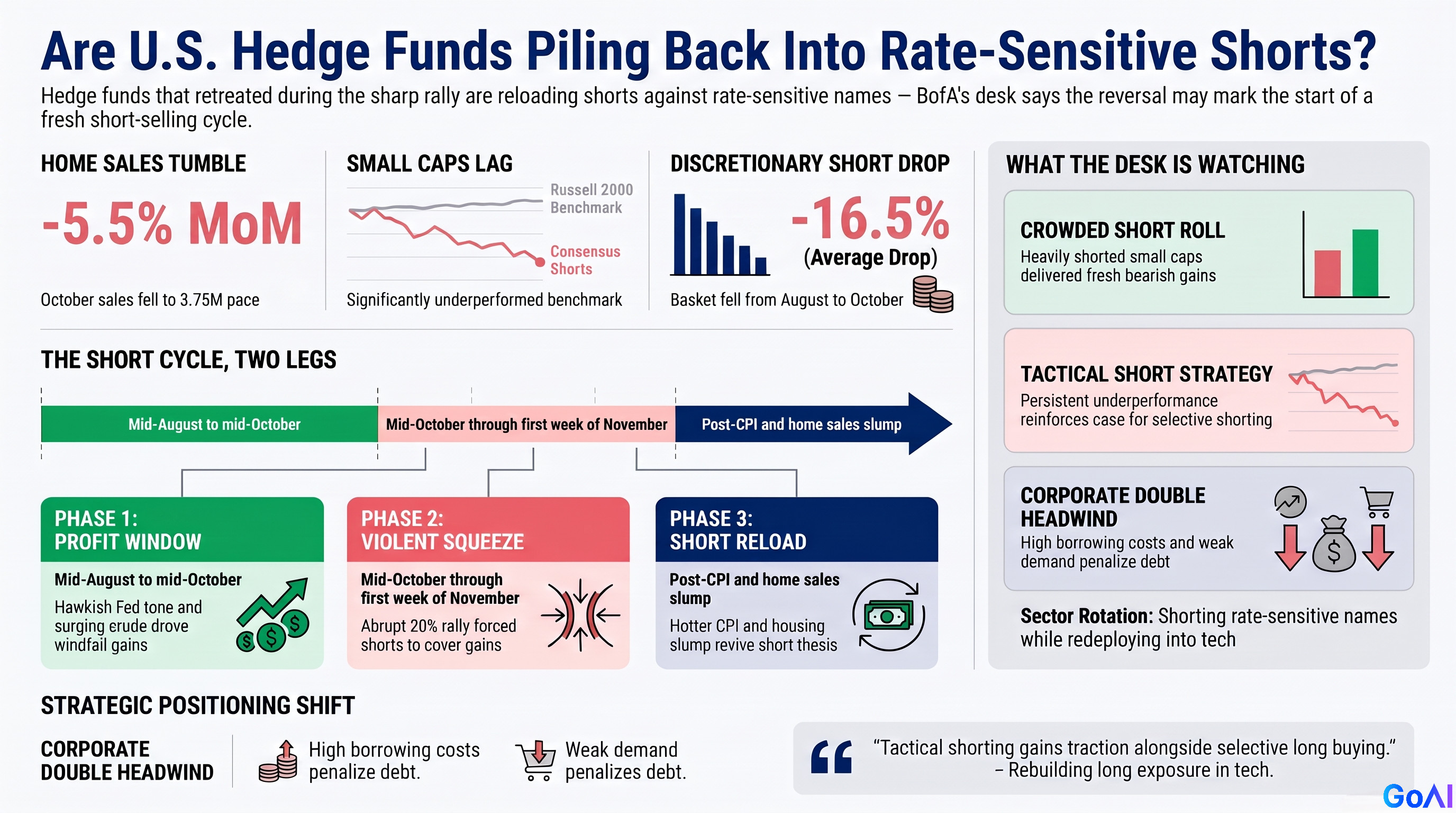
Hedge funds that were forced to retreat during the sharp rally in U.S. equities are staging a comeback, reloading short positions against rate-sensitive stocks, according to Bank of America’s trading desk.
Traders say the reversal could mark the start of a fresh short-selling cycle.
Stubbornly elevated inflation readings alongside weak U.S. housing data—October existing-home sales tumbled 5.5% month-over-month to an annualized pace of 3.75 million units, missing consensus expectations of 3.85 million—have handed short sellers fresh ammunition to target companies strained by high borrowing costs.
BofA data show that a basket of consensus-shorted small-cap stocks significantly underperformed the benchmark Russell 2000 Index on Thursday, delivering gains to bearish investors as heavily shorted names rolled over.
John Egan, head of global short-selling analysis and tactical solutions at BofA, said the persistent underperformance of crowded shorts reinforces the case for bearish strategies.
Looking back at the recent market cycle, short sellers reaped substantial profits from mid-August—when the Federal Reserve struck a hawkish tone at its Jackson Hole symposium—through mid-October, as surging crude oil prices stoked inflation fears and weighed on equities.
That backdrop proved particularly punishing for companies squeezed by elevated interest rates, softening consumer demand, and rising debt-service burdens.
Egan noted that some of the steepest gains came from shorting consumer discretionary stocks, where consensus short baskets dropped an average of 16.5% over that two-month span, generating windfall returns for bears.
From mid-October through the first week of November, however, those same names staged an abrupt roughly 20% rally, forcing shorts to cover and lock in exits.
The violent squeeze wiped out most of their prior gains, with several stocks round-tripping back to the levels where positions were initiated in August.
Now, Tuesday’s inflation print is poised to revive the bearish thesis: a hotter-than-expected U.S. CPI reading has reinforced expectations that the Fed may need to keep rates higher for longer to keep inflation in check, while the latest slump in existing-home sales only compounds those concerns.
For companies saddled with stretched balance sheets and softening consumer demand, the combination creates a clear double headwind.
Still, the positioning shift does not necessarily signal broad-based pessimism toward U.S. equities. Rather, hedge funds are increasingly rotating back into shorts on companies vulnerable to higher borrowing costs and weak consumer spending while redeploying capital into technology shares.
“Based on recent market dynamics, short-selling strategies appear poised to gain fresh traction,” Egan said. “At the same time, investors can look at rebuilding long exposure that was pared back during the broader market pullback.”